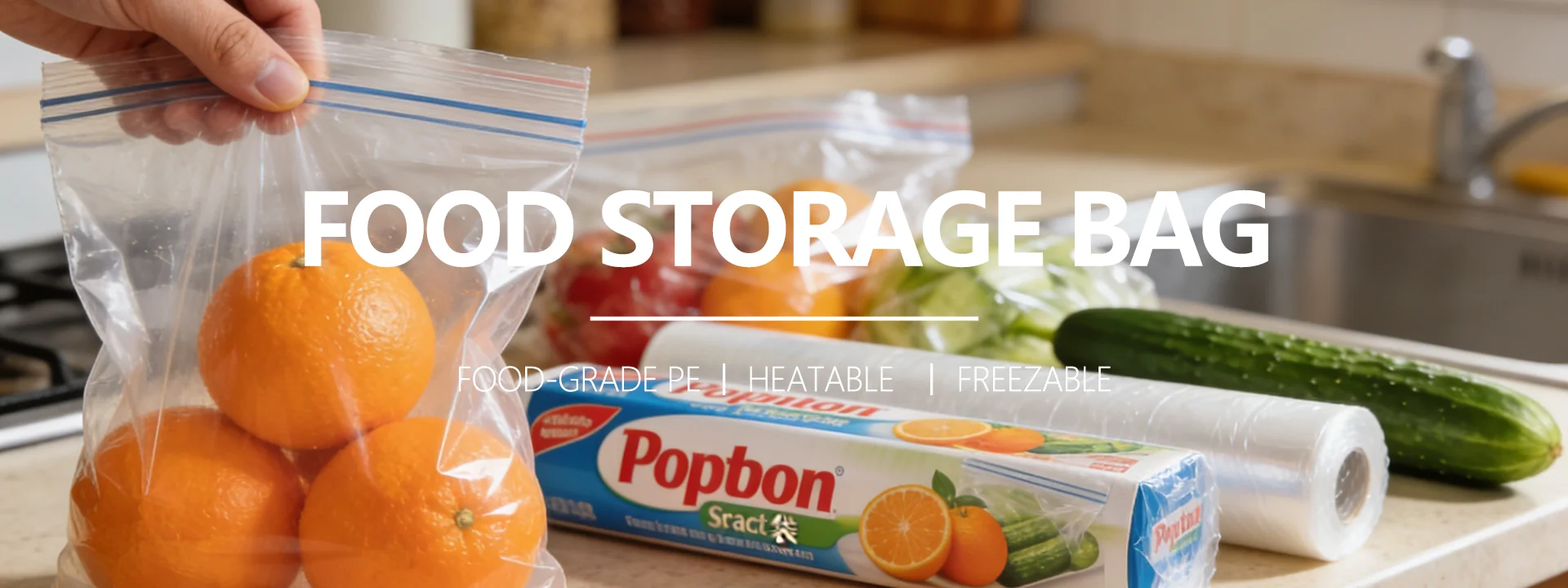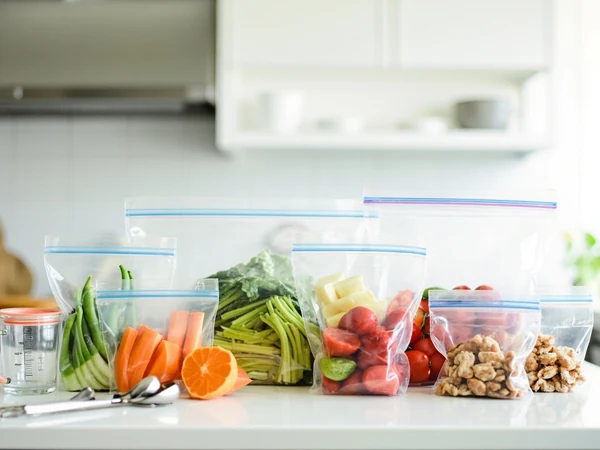
Selecting a ziplock bag is not simply a matter of choosing the largest capacity. A suitable specification should reflect the volume of the food, the way it will be portioned, and the conditions in which it will be stored.
Capacity is the first consideration. Small bags work well for modest amounts of sauces, nuts, or sliced fruit. Soups, rice, and larger ingredients need more room. Overfilling makes the zipper harder to close and increases the risk of leakage or crushing when bags are stacked in a refrigerator or freezer. A useful rule is to choose a capacity that leaves about one quarter of free space after the food is placed inside.
Opening width matters just as much. A narrow opening helps control pouring and suits flat or long foods, while a wider opening makes it easier to insert hands, measuring cups, or utensils when organizing vegetables and chunky ingredients. For frequently used bags, check that the zipper runs smoothly and that the filled bag can still lie flat.
Thickness affects both durability and cost. Lightweight bags are practical for light foods and short storage periods. Heavier-gauge bags resist tearing better and are better suited to denser ingredients, stacking, or longer storage cycles. Instead of judging only by the thickness of a single layer, consider the overall bag construction, seal dimensions, and applicable food-contact requirements. Always follow the product instructions, and do not use a mismatched bag for reheating or for holding hot or oily food.
Good storage habits also matter. Remove excess air before sealing, label the food and date, and keep the bag clean and dry. By first matching capacity and opening width to the food and handling routine, and then choosing thickness according to weight and storage duration, users can get a ziplock bag that balances usable space, sealing performance, and everyday convenience.