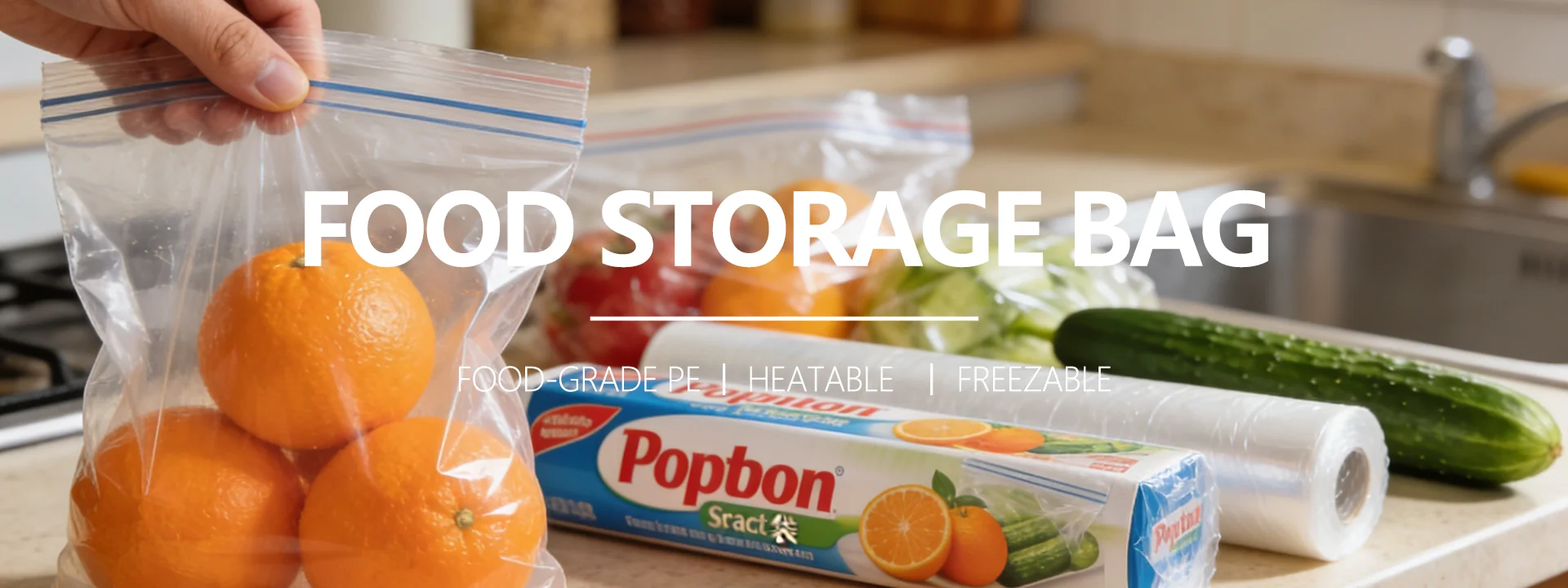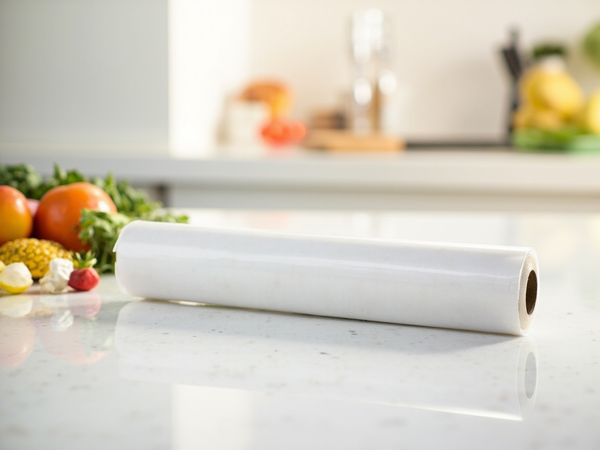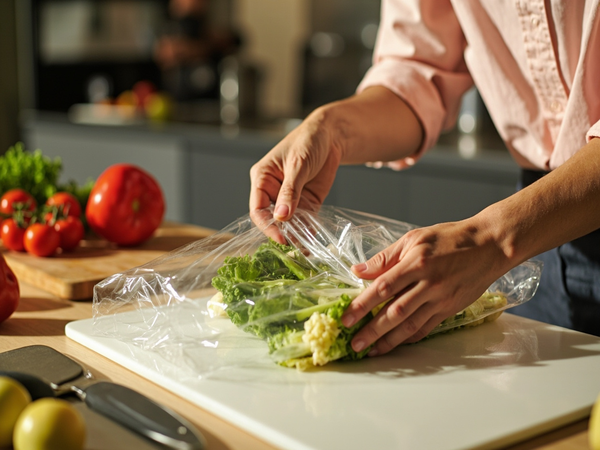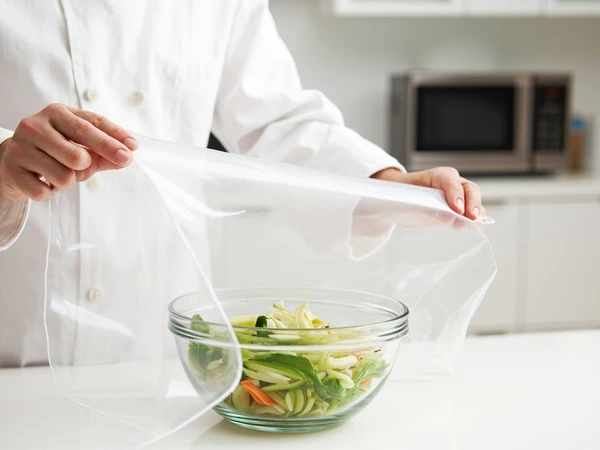
Pulling a sheet of cling film straight over soup that has just come out of the microwave, or over a sizzling clay pot, happens in almost every kitchen every day. Yet most people do not really know whether the roll in their drawer is designed for that use. PE cling film is one of the most common food packaging films: it stretches well, seals tightly and blocks moisture vapour effectively, which makes it excellent for chilled and frozen storage. In heated applications, however, it has clearly defined limits. Knowing where those limits sit is far more useful than a simple yes or no.
Three variables determine heat performance
First, the resin formulation. PE is a semi-crystalline polymer with a melting temperature typically above 120°C. As a film approaches that range it shrinks, thins and becomes tacky, tensile strength drops quickly and the heat-sealing window narrows.
Second, film thickness. With the same formulation, a thinner film conducts heat faster and softens or collapses sooner under identical contact temperature. Heavier gauges slow this process noticeably, although they also change the stretch feel and the cost structure of the finished roll.
Third, how the film touches the food. Laying film directly onto a steaming soup surface or a hot pot rim is a different load from briefly covering a plate of warm food. Contact area, contact duration, and whether the food carries oil or moisture all change the outcome.
Covering hot food: a more reliable approach
The logic is "cool first, then seal", rather than asking the film to withstand the heat source. Portion food into shallower layers so heat dissipates faster; match the film width to the rim of the container so the film is not repeatedly stretched thin at the edge; for very hot soups, use aluminium foil or a ziplock bag with a heat-resistant container for the second layer instead of letting cling film touch a rolling liquid surface. Steamed vegetables and sauced cooked food seal best after cooling, and hold freshness better too.
Can cling film go in the microwave?
The test is not the PE material itself, but whether the product explicitly states that it is microwave safe. Ordinary household PE cling wrap is usually designed for refrigeration and freezing only, and has not been validated for heat shrinkage or migration in a microwave cavity. Film that is not heated first can shrink onto the walls, stick to the food, and, in prolonged contact with oily food, raises migration questions. Products that are labelled microwave safe carry stated time limits, heating methods and container requirements, and ordinary film should never be substituted for them.
Four rules you can apply straight away
One, remove the film before heating and transfer the food to a microwave-safe container. Two, after heating, cover the dish with heat-resistant cling film or a ziplock bag so that hot oil does not touch ordinary film. Three, regardless of what the label says, avoid prolonged high-temperature heating and avoid letting film sit tightly against food. Four, the same applies to ziplock bags: empty them and cut a small vent before heating so the sealed package does not build pressure inside the cavity.
For households and commercial kitchens alike, treating "can it go in the microwave" and "can it cover hot food" as two separate questions is far more dependable than remembering only that cling film preserves food. At Baodafor, raw material selection, cast extrusion and slitting are managed against food-contact requirements throughout production. Customer requirements for heat level, grammage and application vary widely, so defining the real end use during selection is what makes it possible to recommend matching gauges and formulations.