On the retail shelf, shoppers judge a packaged food by more than the ingredient list and the graphic design. They also instinctively smell the pack, checking whether it carries a plastic or rubbery odor. That odor sits outside the food-safety red lines, yet it directly drives repeat purchase. For food packaging suppliers, odor control is a product discipline that is easy to overlook but has to be managed down to material and process detail.
Where packaging odors come from
Odor in food packaging materials usually originates at three points.
First, the raw material stage. Recycled content that has been through repeated thermal processing can retain a noticeable degradation odor, and processing aids that are dosed too heavily or dispersed unevenly can leave an odor on the finished film.
Second, the process stage. Solvents used in lamination or printing that are not fully recovered leave residual odors on the product, while an overheated sealing jaw can locally degrade the material and produce a burnt smell.
Third, the warehouse stage. Film is a porous, adsorptive material. If volatile substances such as cardboard, cleaning agents or adhesives are stored nearby, long-term storage lets the film take on those odors. A pack that passes inspection at the factory but arrives with an odor at the customer end is most often a storage problem.
How odor migrates into food
Migration refers to odor molecules left in the packaging material transferring onto the food surface during contact. Its intensity depends on three variables: contact area, contact temperature, and contact time. Ziplock bags and cling wrap that sit directly against food have the largest contact area and the longest contact time, so they carry the highest migration risk. Aluminum foil and baking paper act as separation layers and rely mainly on their barrier structure, which lengthens the migration path.
How material types behave differently
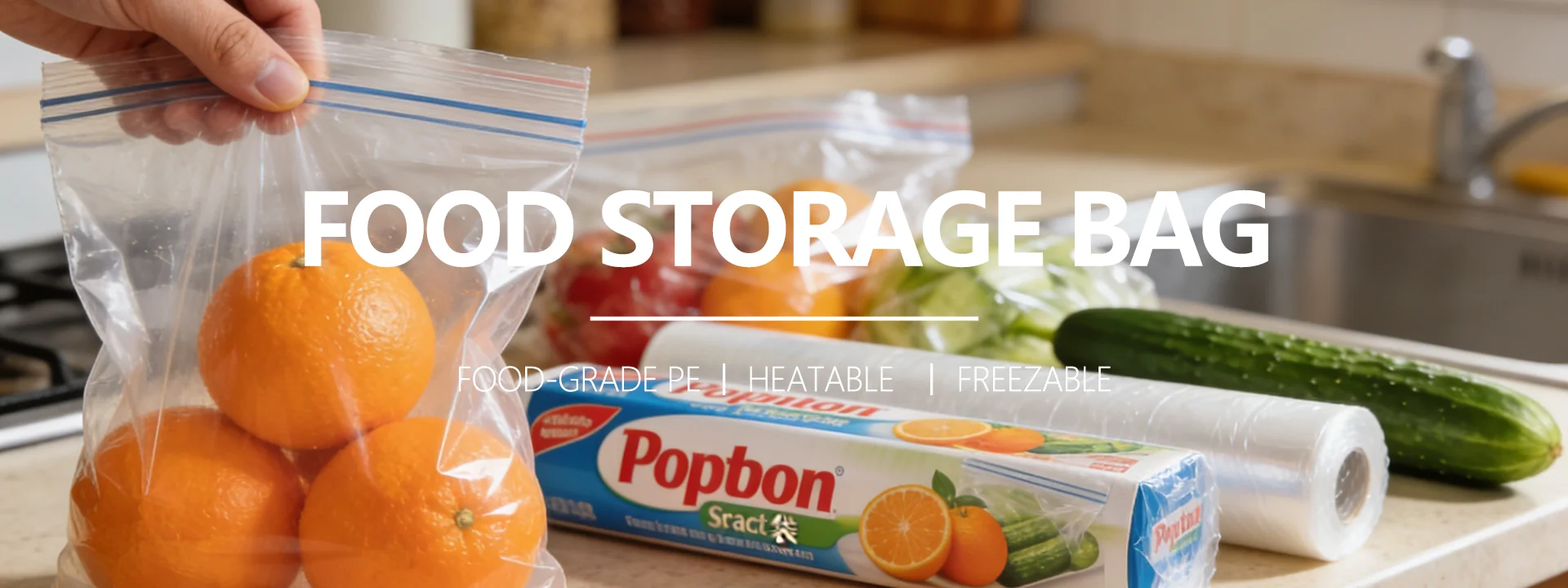
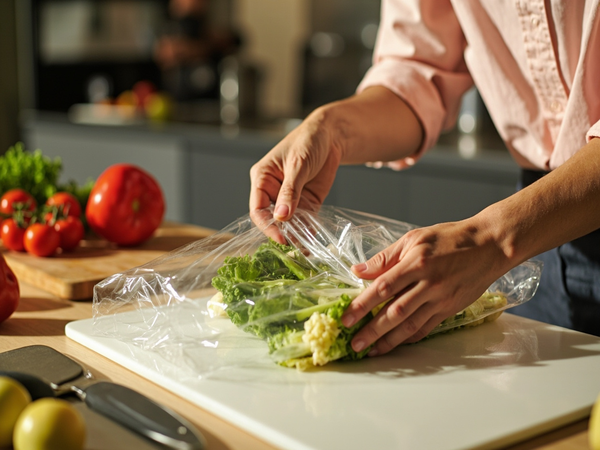
PE cling wrap and ziplock bags: PE has inherently low odor and leaves no solvent residue, which is the baseline advantage for odor control. Two points still matter. Select film with a clearly documented material source and consistent batch-to-batch odor; and remember that a sealed ziplock bag lets odor circulate inside the bag, so strongly aromatic ingredients such as curry, garlic and fresh chili are better stored short-term and eaten promptly.
Aluminum foil: it blocks odor and light almost completely, making it the natural choice for aroma-lock scenarios and a common solution for isolating baking odors during oven work.
Baking paper: the deciding factor is the coating process. Evenly coated paper with stable grammage does not push a noticeable paper odor back through during baking, and because paper fibers are highly adsorptive, baked paper should still be stored away from odor sources.
Three actions procurement teams can take
First, request material source documentation and odor comparison samples across batches. Batch-to-batch odor consistency from one supplier is the most direct way to judge how stable that supplier's production really is.
Second, run a simple migration trial. Seal the packaging material together with the actual product in the same bag, hold it at the product's storage temperature for 24 to 48 hours, then compare the odor against a blank control when the bag is opened. This trial costs very little and catches most migration problems before they reach the shelf.
Third, ask suppliers to explain their additive system and disclose what they use. Odor is usually tied directly to the type and dosage of processing aids, and asking early is far more effective than chasing the issue afterward.
A note for stores and households
Keep incoming packaging away from cleaning agents and pest-control products; sort ziplock bags by ingredient so garlic, curry and lemon are stored separately; and use aluminum foil and baking paper soon after opening, since paper that has absorbed odors will give them back more strongly.
Competition in food packaging is shifting from whether a pack can contain the product to how well it protects it. Odor and migration carry no certification barrier, yet they are the factors consumers notice most easily and that are hardest to fix after the fact. Managing the details of raw materials, processes and warehousing, and then running one straightforward migration trial, is often enough to separate good product on the shelf from average.