Dairy is one of the most common food categories in both home kitchens and commercial back kitchens, and it is also the category where packaging selection matters most. Yogurt is vulnerable to moisture loss and bacterial contamination. Hard cheese is vulnerable to fat oxidation and flavor fading. Butter is vulnerable to odor transfer and surface discoloration. Whipping cream is vulnerable to collapse and moisture weeping. The failure mechanisms are completely different for each product, and trying to cover all of them with one packaging type is the most common reason freshness results turn inconsistent.
1. Understand the failure mechanism before choosing material
Start by working out where the product actually fails. For yogurt and fresh milk, the main risks are microbial growth and moisture evaporation, so the decisive indicators are sealing performance, adhesion and short-term barrier. For hard cheese and butter, the main risks are fat oxidation and aroma loss, so the decisive indicators are oxygen transmission rate and light blocking. For whipping cream and soft butter blocks, low-temperature resistance to compression and deformation has to be considered as well. Once these three risk groups are mapped onto packaging functions, the material selection becomes straightforward.
2. The division of labor across ziplock bags, cling wrap and aluminum foil
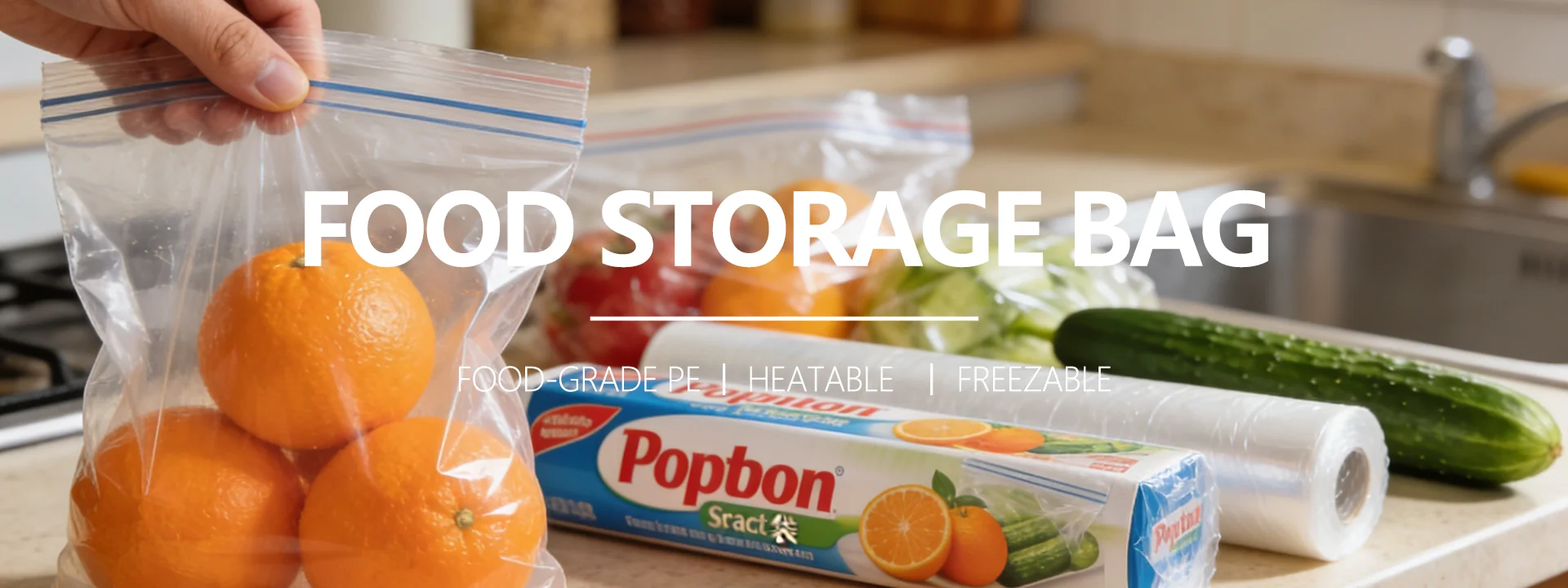
Ziplock bags excel at portioning and repeated access. Cheese that has been opened, or butter that has been scooped, can be moved into a ziplock bag and sealed. Only the portion actually needed is taken out and the rest is closed again, which reduces the number of times the product meets air and avoids repeatedly opening and closing the whole block. This depends on stable seal strength and consistent barrier performance in the bag body itself.
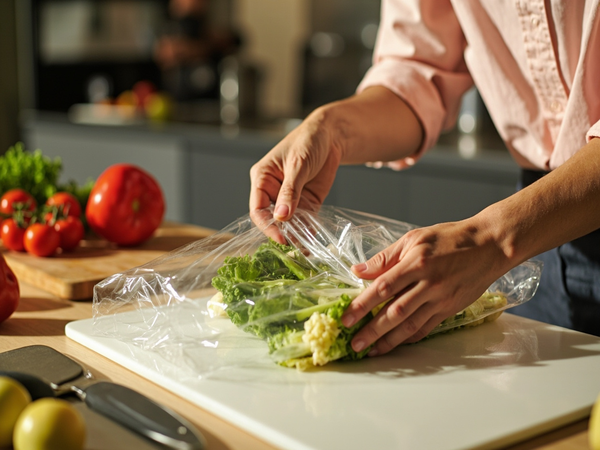
Cling wrap is built for covering and temporary sealing. A layer of film over a bowl of yogurt, over a cut product, or over a container of mixed sauce solves short-term surface contamination and moisture evaporation. It is not meant for long-term storage of high-fat dairy, nor for contact with high temperatures.
Aluminum foil is built for light blocking and oxygen exclusion. Dairy products are broadly light-sensitive. When cabinet lighting, daylight and transparent packaging combine, cheese surfaces tend to darken and butter can develop a rancid odor. The light blocking and barrier performance of foil effectively slow this process down, and they also stop flavor transfer between cheese and butter stored side by side.
3. Matching packaging to product type
At home: a plain yogurt box needs nothing more than cling wrap over the top before refrigeration. A cut block of cheese belongs in a ziplock bag in the fridge. A block of butter should be sealed in a ziplock bag or wrapped in aluminum foil and kept away from light.
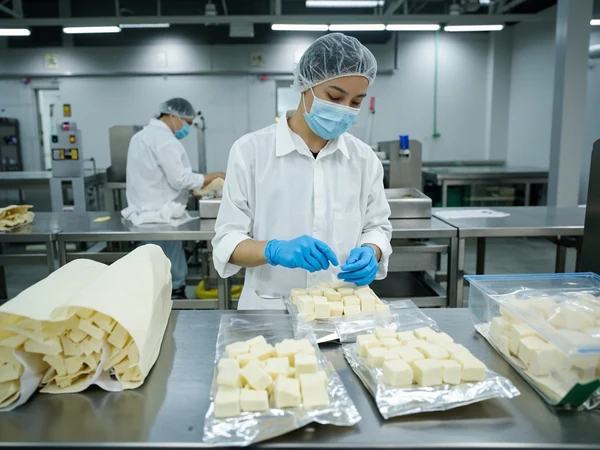
In commercial back kitchens: cheese slices and shredded cheese that are used continuously are more efficient when portioned into ziplock bags with labels. Butter blocks and whipping cream that sit temporarily in a cold cabinet are better protected by a ziplock bag with an outer layer of aluminum foil. Covering open prep containers with cling wrap to prevent odor transfer is the cheapest and most effective approach.
In baking: butter and cream held at room temperature need short-term protection from dust and sticking. Baking paper used as a liner or wrapper performs better than leaving the product exposed to air.
4. Parameters that are easy to overlook
First, low-temperature toughness. Almost all dairy sits in a cold cabinet, and when film material becomes brittle, cracks or loses adhesion at refrigeration temperatures, sealing performance is directly affected. Second, adhesion and elasticity. Cling wrap over a bowl rim needs to conform without sticking to the product, and insufficient elasticity causes the film to lift off on its own after a period of covering. Third, the balance between barrier performance and thickness. Dairy consumption volumes are large and material costs are sensitive, so simply going thicker is not economical; matching material to product type is more practical. Fourth, food-contact compliance and odor transfer. Packaging should not transfer any odor into dairy products, and it is not advisable for film to stay in direct, prolonged contact with high-salt or high-acid contents.
5. Two recommendations for purchasing and use
First, purchase by product group rather than by single SKU. Ordering ziplock bags, cling wrap and aluminum foil as one matched set for the same product category makes it easier for kitchens and households to pick what they need on demand and keeps inventory turnover smooth. Second, set a clear standard for how long an opened product should be used. High-moisture products should be consumed soon after opening, and high-fat, high-moisture products should be portioned rather than stacked whole, which noticeably reduces waste.
The value of packaging is not about blocking out as much as possible. It is about keeping a product in the state it should be for the right amount of time. Dairy makes that point especially well: choose the right material, and everything else follows from time.