Modified Atmosphere and Vacuum Packaging Take Hold in Fresh Food Supply Chains: How Ziplock Bags and Aluminum Foil Divide the Work
Over the past decade, cold chain logistics, supermarket own-brand programs and central kitchens have stretched the distribution radius of fresh food. That same shift changed the job packaging is asked to do. Holding the product and sealing the bag still matter, but the harder question is how well the pack manages gases and moisture. Three routes dominate the conversation: vacuum packing, modified atmosphere packing and oxygen scavenging. On the shelf they look similar, because each one pulls air out before sealing. Underneath, the working principles differ, the product groups they suit differ, and the material choices behind them differ as well. This article walks through the three routes in the order the industry actually deploys them, then builds a selection framework you can apply to a specific product.
Vacuum, gas flush and scavenging: three routes with different boundaries
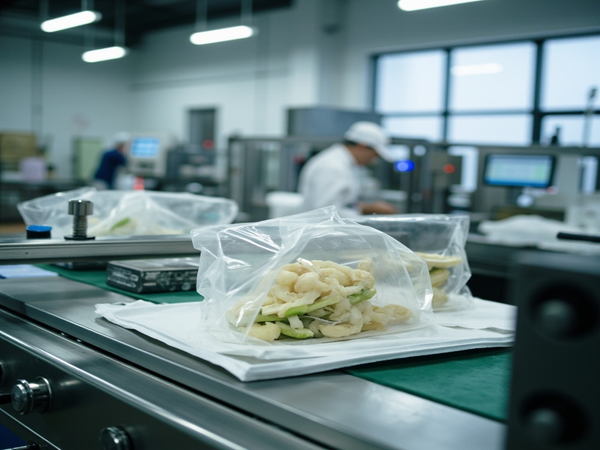
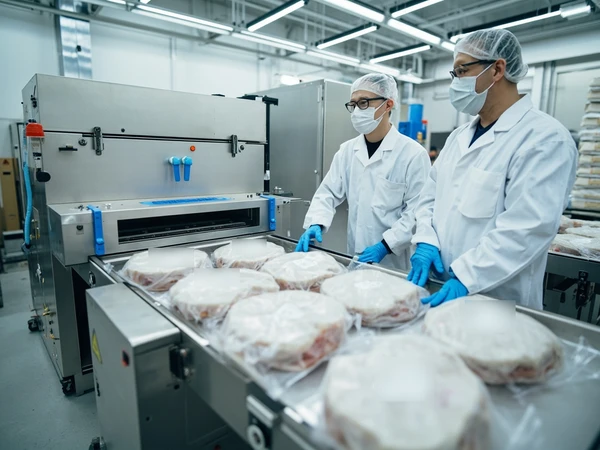
Vacuum packing draws out most of the air and seals the bag so the film collapses onto the product. The principle is straightforward: lower the oxygen level, draw off part of the carbon dioxide the product itself produces, and slow down aerobic bacteria and mould. The classic line pairing is a shrink bag with a vacuum machine, or a tray running through a chamber packer. It suits products with a firm structure and moderate moisture that tolerate being pulled tight: primal and portioned red meat, whole poultry, cured products, some hard cheeses and firm-textured seafood. The boundaries are just as clear. Wet products, brined cuts and delicate fillets such as opened fish, dressed poultry or soft-bodied seafood often look shrunken and dry after a hard vacuum. Liquid gets drawn into the channel along the bottom of the bag, and the seal line is usually the first place to fail.
Modified atmosphere packing works on a different logic. The original air is removed and a calculated blend of nitrogen, carbon dioxide and oxygen is backfilled, so the blend rather than the vacuum does the work. Carbon dioxide suppresses the surface flora, nitrogen is largely inert and dilutes the headspace, and leafy produce needs a small amount of oxygen to keep respiring instead of collapsing into brown wilt. Common practice is a nitrogen-dominant mix for red meat with roughly a fifth to a third carbon dioxide, one to five percent oxygen for leafy greens with nitrogen making up the balance, and a high nitrogen, low oxygen profile for fish and shellfish. The blend has to be accurate. Too little carbon dioxide and the shelf life target is never reached; too much oxygen and greens brown and wilt faster than they would have on ice.
Sachet-based scavenging, using oxygen absorbers or preservatives, is the low-cost route. It works well for smaller packs and short chains, but it does not replace a barrier structure. If the outer layers transmit enough, the sachet is consumed far faster than the designed window and the pack loses protection well before the date printed on it.
Two numbers decide everything: transmission rates and humidity
Whether a gas strategy works comes down to the barrier of the film measured against the moisture content of the product. Oxygen transmission rate sets how long the headspace composition can be held. Water vapour transmission rate sets how fast the product dries out and how fast condensation forms inside the bag. For processed meat and fresh fish, the most common failure is not a wrong blend, it is condensation. When the product temperature sits below the dew point of the surrounding air, moisture forms on the inner wall of the bag. Those droplets redissolve surface organisms and turn a pack around faster than the label suggests.
Holding both numbers down is a matter of structure rather than thickness. Multi-layer coextrusions such as PE/PA or PE/EVOH use a functional layer to push transmission rates very low while an outer PE layer provides heat sealing and stiffness. Aluminum foil laminations are the more complete answer, common where long ambient or elevated shelf life is required, in ready meals, soup and wet pet food.
Gas filling adds one constraint that gets overlooked. The bag has to match the product. An oversized bag dilutes the blend and burns through it faster. An undersized bag pushes product into the sealing area, where contamination weakens the seal and gas escapes during filling.
Three channels, one gas logic, three different selections
Central kitchens and prepared meal plants do the cooking, portioning and sterilising before packing, so the pack has to lock in flavour, survive distribution and deliver a defensible date. Strength and sealability matter more than presentation, and multi-layer high barrier pouches plus foil laminations carry most of the work.
Fresh retail is different. The pack sits on a shelf under light for a long time and gets handled constantly, so presentation and cost pull in opposite directions. Segmentation and tray-over-film combinations are common, gas-flushed packs are reserved for higher value cuts and prepared salads, and standard cling film and PE pouches cover the rest.
Foodservice and bakery channels run to the rhythm of the meal service. A portion has to be sealed in seconds, so the heat seal window and machine cycle time matter more than the barrier class. Baking paper and aluminum foil are used for baking, separation and takeout packaging, not for managing atmosphere across a long shelf life.
Five failure points that show up on the line
Contamination in the sealing area. Bone fragments, fat and sauce trapped between the film layers cut sealing strength dramatically. The pack then fails by leaking gas rather than by splitting open.
Creases and product in the seal. When a fold lands in the sealing area, the vacuum pulls it flat. It looks like a bulge but is really a channel for air to travel along.
Incomplete evacuation. Insufficient vacuum or a short draw time leaves air inside, the blend is diluted, and a gas flush line quietly stops doing what it was specified to do.
Mismatched bag and product. Too much headspace dilutes the mix, and overfilling stretches the sealing area open.
Cold chain interruption. Gas strategies are sensitive to stable temperature. A long warm dwell in transit changes both the headspace composition and the condensation state, and every shelf life calculation made before that point has to be revised.
Where ziplock bags, aluminum foil and cling film belong
Ziplock bags resist puncture, hold up under vacuum load and handle oily, brined products, which makes them the natural choice for portioned meat and for cured and semi-finished goods. When high barrier is needed, specify a multi-layer coextrusion and confirm the oxygen transmission rate range for that structure rather than relying on a generic food-grade description.
Aluminum foil and foil laminations offer the strongest barrier and temperature resistance, and suit products that need light protection, oxygen exclusion, heat resistance or long shelf life. The trade-offs are real: higher cost, a narrower sealing temperature window, and a greater risk of pinholes along crease lines.
PE cling film serves the retail counter, where high cling, low cost, short shelf life and high handling frequency are what matter.
Baking paper serves the oven and the separation job, where heat resistance and release performance are the core metrics. It is not asked to manage gases over a long shelf life.
What Baodafor can add at this stage
Instead of handing over a single specification, we can define the structure, thickness, size band and sealing parameters as one package for a given channel and shelf life target: whether a functional barrier layer is required and where it sits in the structure, which side is treated, the target transmission rate range, the sealing temperature and pressure window, and the recommended bag style and size band. During sampling, both sides run the same acceptance checklist at first article, then mid-run, then at production scale. For production batches, we can attach the measured data for that batch, so downstream shelf life calculation and exception tracing work from numbers rather than assumptions.