Baodafor Builds a Shopfloor Improvement Suggestion System: Turning Problems Found on the Line into Measurable Gains in Material Loss and Efficiency
1. The most valuable insight on a packaging line comes from whoever spots it first
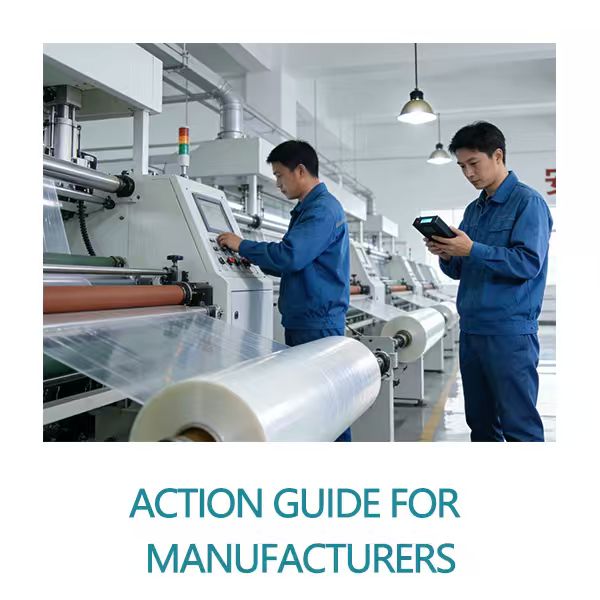
Few problems on a food packaging line arrive suddenly. A wrinkle at the splice, a cold seal along a bag edge, a slow drift in slit dimensions, the hiss of compressed air at one fitting: each of these is noticed first by the operator standing at the station, and each is then often washed away in a verbal handover along the lines of "it is a small problem, it will hold for now". By the time it turns into continuous scrap or a line stop, the issue is no longer a single point but the slope of a curve.
Baodafor runs lines for ziplock bags, PE cling wrap, aluminum foil and baking paper, against a production mix that is specification-heavy and changeover-heavy. Experience matters in that environment, but experience only turns into capability if it can be written down, verified and extended. Through 2026 we have connected those judgments made at the workstations to a formal improvement suggestion system, so that improvement no longer depends on one particular person speaking up, or on a supervisor happening to mention it once.
2. Collecting suggestions: keep the cost of speaking up low
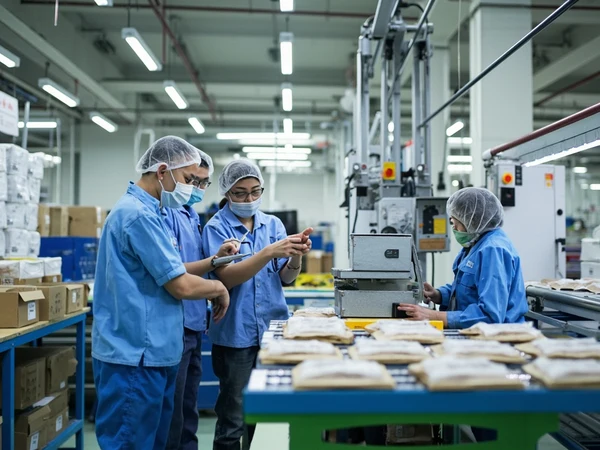
The first rule is a low barrier. An improvement suggestion card sits at each workstation; an operator only writes down what was observed, with no requirement to propose a full solution and no need to prove the observation is right first. Each team holds a fixed monthly improvement day where process, equipment and production review the cards together and sort them into four directions: raw material loss, equipment stability, efficiency gains, and safety and hygiene, so that every suggestion does not pile onto the same single topic.
The second rule is clear ownership. Sorting is not triage for its own sake; it hands each problem to the people able to verify it. Loss-related items go to process and production, who watch material consumption per roll and the scrap rate. Stability items go to equipment, who track downtime length and repeat failures. Efficiency items are judged on hourly output and changeover time, while safety and hygiene items are followed up by quality. Card numbers and statuses are posted on the team board, moving from "collected" to "in trial" to "standardized", so that the person who raised an item can always see where it stands.
3. Making suggestions stick: trial first, then standardize
Many improvement systems fail not because nobody has good ideas but because the trial step is missing. An idea is written straight into a work instruction, does not hold under new conditions, and the line quietly goes back to the old way of working. Our approach is that every card that passes review goes through a controlled trial, run on one team, one machine or one batch of product for a defined period, comparing material consumption per roll, scrap rate, changeover time and downtime before and after, so that the improvement is shown to be stable rather than accidental.
Most of the changes that grew out of shopfloor cards are unremarkable. A locating jig was added at the splicing station, and wrinkling scrap there dropped. Fixed sealing temperatures were replaced by a temperature curve trimmed to each material batch, and complaints about leaking bags from cold seals fell. Every compressed air fitting was checked one by one and sealed, so line pressure held steady and the lines no longer slowed down when pressure dipped. Each of these is small, and they share one logic: the improvement does not change the product design, it changes what the hands at the station do.
4. These details end up in the customer's hands
Customers never see a suggestion card or a jig at a workstation. What they see is batches with consistent dimensions, reliable seals and stable lead times. Lower material loss means more qualified product from the same input and a more controllable material cost per unit. Shorter changeovers mean multi-specification orders can be delivered sooner. More reliable data at line release and first-article confirmation means fewer reworks and fewer complaints.
At Baodafor, then, an improvement suggestion program is not an extra employee activity. It is a way of turning shopfloor experience into organizational capability: once an improvement at one station has been verified, written into a work instruction and copied to other lines, it no longer depends on whether the person who proposed it is still in that position.
5. Give people a reason to speak up
Whether such a system keeps running depends on whether people who raise items think it is worth their while. At Baodafor, suggestions are reviewed on a fixed cycle, those that are adopted and run stably are reflected on the team improvement board, and their measured results are reported at the monthly production and quality review. We also give the person who raised an item a clear commitment: when an adopted suggestion is standardized, it carries that person's employee number and name, so the improvement on the line can be traced back to a specific person.
It is worth being clear that a suggestion system, quality system management, equipment preventive maintenance and process document version control are different parts of one logic. Suggestions answer the question of what we can still do better, while procedures and standards answer what we must do. Used together, they keep line problems from escalating into the batch they would otherwise become.
For the food packaging industry there is ultimately one test: whether every roll of PE cling wrap, every ziplock bag and every sheet of aluminum foil a customer holds performs as well as the last one.