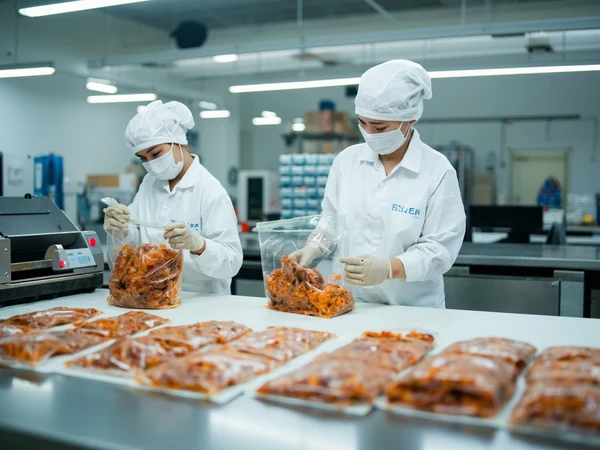
A bag of braised meat goes into the refrigerator, and the next morning an oily film has appeared across the bag wall; freshly fried chicken is packed into an ordinary bag and oil slowly seeps out around the seal. In most cases the bag is not damaged - oil resistance simply was never part of the selection criteria. Ziplock bags are commonly made from food-grade PE film. PE is hydrophobic and water-resistant, yet oil still gets out. What actually decides the outcome is a set of three variables: film thickness and formulation, seal strength and width, and the way the food is packed.
Three paths for oil to escape
Permeation through the film. Under pressure, oil migrates slowly along the PE molecular chains. The thinner the film and the lower its density, the faster the migration happens. Low-density PE is softer and easier to stretch, but its oil and abrasion resistance is weaker than medium- and high-density formulations.
Leakage at the seal. When heat-seal strength is insufficient, or when oil film and sauce residue are left on the sealing channel, oil creeps out from the edge of the seal. Sealing temperature, pressure and dwell time must all fall inside the sealing window of the material: too low and the seal will not hold; too high and the sealed area turns thin and brittle, so the bag leaks as soon as it is lifted.
Pinholes and scratches. Micropores and scratches created during slitting, die-cutting and filling are the easiest route for oil to take. The thinner the film, the more easily it is cut by bones, sharp packaging edges or carton corners.
Matching specifications to the food
Braised, red-cooked and sauced products. These carry a lot of liquid and clinging fat, so choose a thicker specification and a bag opening slightly larger than the food volume. Pack the food after it has cooled, so hot oil does not attack the seal. For cold-chain transport, adding a layer of aluminum foil provides a second barrier.
Fried food. Fried chicken, fries and flaky pastries carry very active surface oil straight out of the cooker. Absorbing the excess surface oil with absorbent baking paper before packing noticeably lowers the risk of seepage.
Chilled or frozen oily foods. Choose a low-temperature-rated PE ziplock bag. Film becomes harder and more brittle when cold, and scratches caused by squeezing and stacking are a common source of leaks, so avoid heavy pressure on the packed bags.
Four steps before sealing
First, drain the oil - remove free surface fat with absorbent paper or a strainer before packing. Second, control the temperature - let hot food reach room temperature or chill it before sealing. Third, inspect - turn the sealed bag upside down for a moment and check the seal and film for any oily marks. Fourth, isolate - for foods with bones or sharp edges, add a rigid liner or switch to aluminum foil sealing.
Thickness and sealing parameters have to be decided together
For the same ziplock bag, thickness determines the resistance of the film body to permeation and abrasion, while seal width and heat-seal parameters determine the reliability of the closure. Thicken the bag without changing the seal and oil will still escape from the closure; adjust the seal without changing the film and oil will slowly work through the bag body. In real production both parameters have to be assessed together against the oil content of the food, the storage temperature and the duration of transport.
During the selection stage for ziplock bags, Baodafor reviews film thickness, bag size and sealing method against the food type, the storage and transport conditions and the packing format, and provides parameter recommendations tailored to customer requirements. Household packs and commercial kitchens do not settle on the same values for one set of parameters, which is exactly why this selection step deserves a separate discussion.