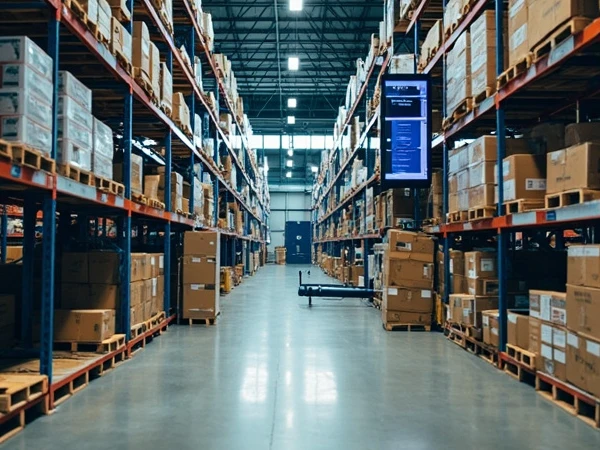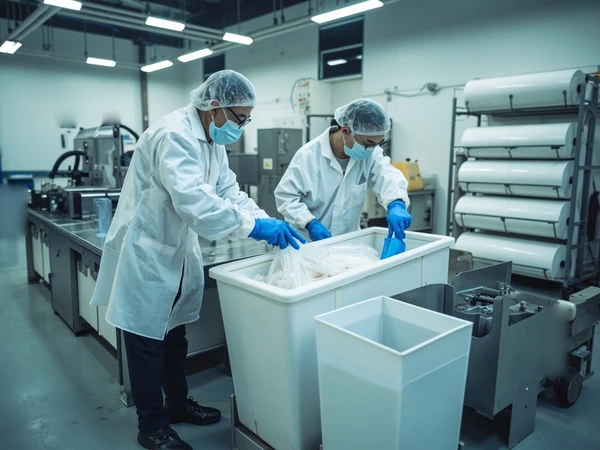
Every slitting, cutting and bag-making line that produces ziplock bags and cling wrap leaves behind trim waste. This material is bulky, low in density and awkward to store. Sending it to mixed municipal waste means paying disposal costs on both sides, and it also sits badly with the waste-reduction expectations increasingly placed on food packaging suppliers. At its Xiamen plant, Baodafor has introduced a closed-loop system for film trim waste, turning what was once waste into a traceable, in-process input.
One. Where the trim actually comes from
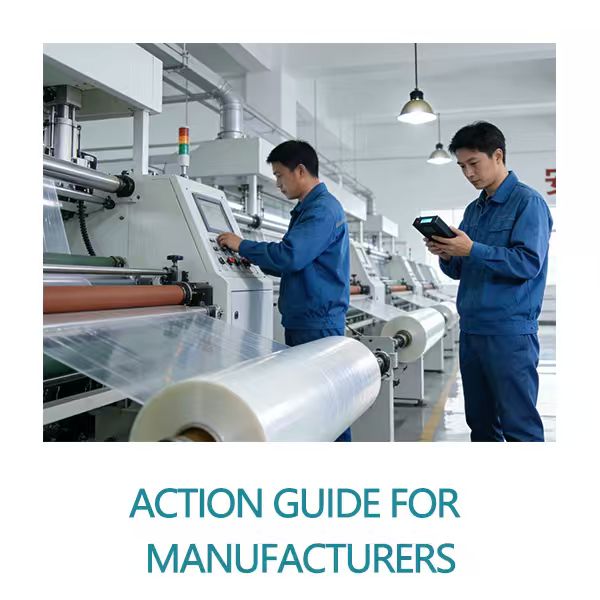
Three points dominate. First, width trim left over when large jumbo rolls are slit into the finished widths a customer orders. Second, head and tail material plus edge scrap created when a roll is changed on the extruder or casting line, together with the transition material purged during equipment cleaning. Third, offcut trimmings left after bag bodies are cut and seals are trimmed. Together these form the bulk of the trim stream. It is unusually valuable material: high-purity PE or similar single-polymer scrap with no metal and no paper-plastic lamination, which makes it far easier to recycle than mixed packaging waste.
Two. Why it cannot simply be dropped back into production
First, thermal degradation. The film has already been through heat in extrusion, drawing and heat sealing, so reintroducing trim at a high ratio risks chain scission, a drop in melt flow index and unstable film bubbles, which show up as bubble jitter and wider gauge variation. Second, cross-contamination. Trim from different colours, barrier formulations and specifications has to be collected and labelled separately; blending them creates colour differences and performance drift that reach the customer immediately. Third, foreign matter. Dust, adhesive pellets and metal fragments must be removed through screening and magnetic separation, because any residue left in the film appears as gel points on the web or turns into weak seals and leaking bags.
Three. How the loop works: sorting, grinding, filtering and blending
The sequence is sorting, grinding, filtering, blending. Trim is collected by colour and formulation and clearly labelled, with a traceable classification ledger behind it. A dedicated grinder reduces it to a controlled particle size, avoiding oversized feed that would shock the equipment and raise dust. Screening and magnetic separation take out contaminants, after which melt filtration captures remaining gels and crystal points. In blending, the recovered material is dosed back into virgin resin at a controlled ratio, with a batch record and a retained sample kept for every addition. Ratios are raised gradually rather than in one step: each level is confirmed through a trial run checking bubble stability, seal strength and the heat-seal window, and only then does it enter regular production scheduling.
Four. What the system actually changes
For customers, the clearest benefit is delivery consistency. Material-side fluctuations are smoothed out, so batch-to-batch uniformity becomes easier to hold, and because recovered material never enters the food-contact layer directly, the compliance boundary stays clean and no extra documentation is triggered on the customer side. For Baodafor, offcuts no longer leave the site as waste, overall material yield improves, and the cost structure per unit becomes more predictable. Longer term, film packaging reduction and recycling is a shared industry agenda, and the ability to recover and reuse material is itself a technical answer to the waste-reduction targets downstream brand owners keep asking for.
Five. Three practical notes for buyers
Look at material utilisation rather than unit price alone; suppliers that recover trim usually hold their quotes steadier when raw material prices move. If your own pack combines aluminium lamination or paper-plastic structures, ask how the supplier segregates composite waste, because those structures cannot be re-used directly and mixing them contaminates the recycling stream. And when you assess a supplier's waste-reduction capability, ask how trim is segregated, how the reuse ratio is controlled and how retained samples are kept; those details reveal real capability far better than a promise letter.
In food packaging, waste reduction is never only a cost question. It is a question of process capability and of where responsibility sits. Moving trim from the waste pile back into the blending room took disciplined work in sorting, grinding, filtering and dosing, and that is the substance behind the claim.