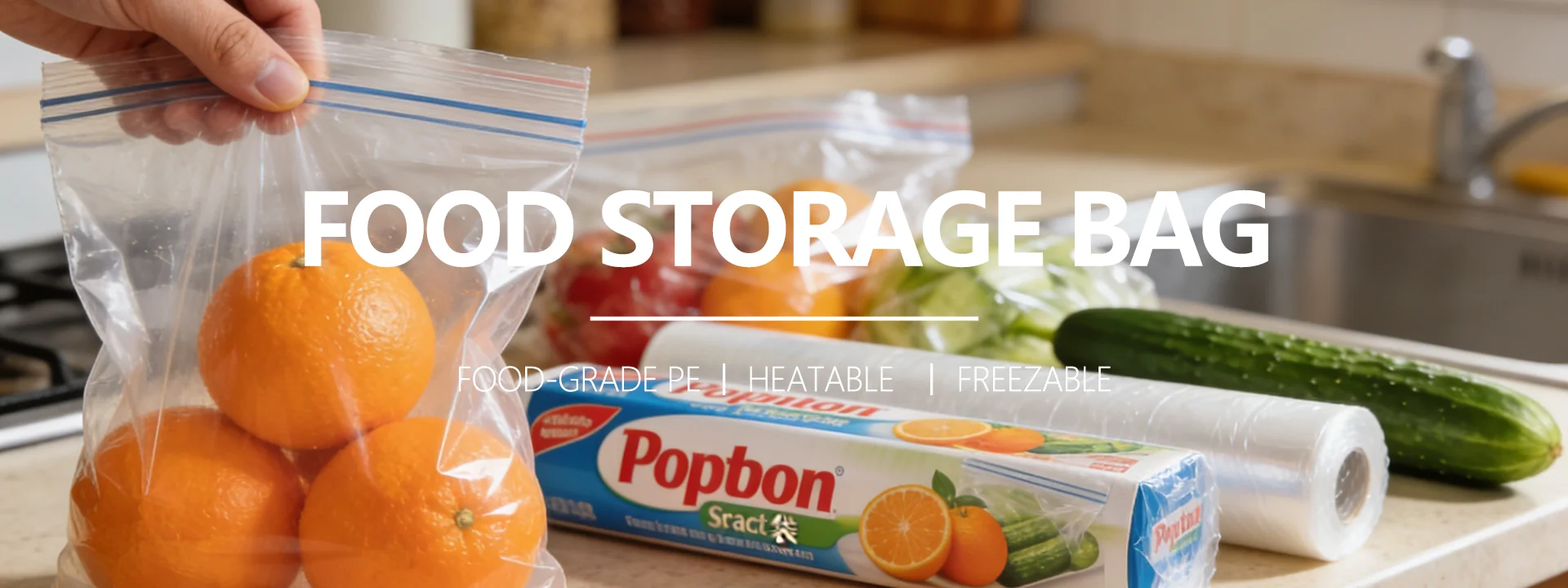
Most people treat a ziplock bag as an ordinary storage bag: fill it, pull the zipper shut, and move on. But the air left inside is quietly working against freshness. Air is roughly 21% oxygen, and continuous oxygen contact drives oxidation - leafy greens yellow, fresh meat darkens, delicate aromas fade. Water vapor in that trapped air also escapes from the food, then condenses on the inner walls of the bag, leaving ingredients sitting in a film of water that speeds up softening and decay.
Air removal requires no equipment. The principle is simple: expel most of the air while keeping a small cushion of gas. Going all the way to a hard vacuum is not the goal. A bag pressed flat against the food can deform soft produce, and a fully collapsed bag is more prone to bursting during freezing as the contents expand. The practical target is a bag that looks visibly tightened, with the shape of the contents still readable through the film, and roughly a tenth of the original volume left behind as buffer.
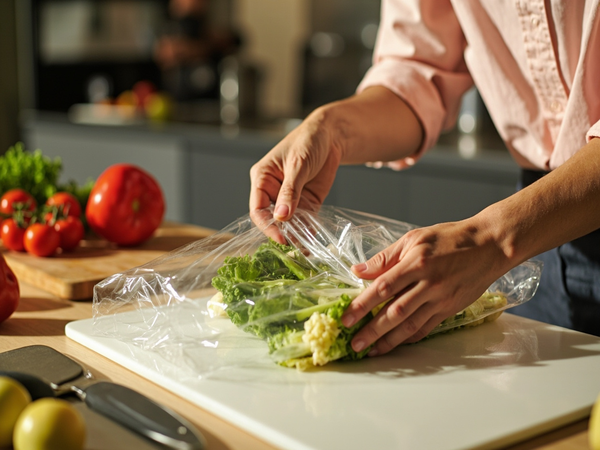
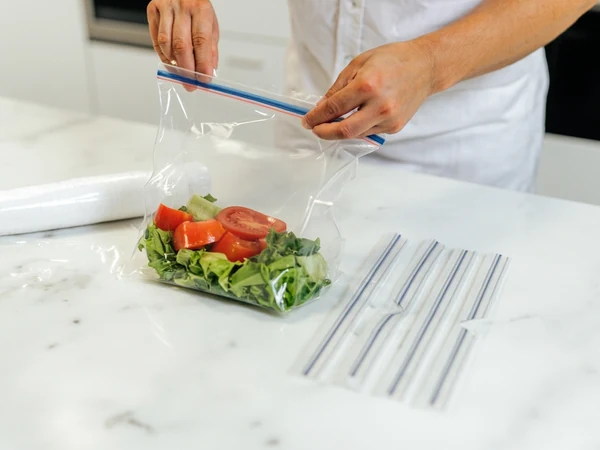
The technique works in three steps. First, lay the food as flat as possible across the bottom of the bag and avoid piling it into a thick block; leave channels between the pieces so air has a path to escape. Second, once the bag is sealed, press with both palms from the bottom upward and from the center toward the edges, driving the gas out gradually. Keep the pressure even and never push hard on one spot, which can bruise the ingredients. Third, confirm that the film has tightened, then check that the closure is fully engaged - on a double-seal zipper, align the two strips carefully and press along the entire length.
The payoff is clearest in refrigeration and freezing. In the fridge, less trapped humidity means noticeably less condensation, and fresh leafy greens often hold for two to three extra days. In the freezer, a tightened bag sits more compactly against the frozen contents, cutting off air exchange and reducing the way odors migrate between packages. Baodafor runs seal strength, double-seal consistency and low-temperature bag-body durability as routine checks on its ziplock bags, so a bag that has been compressed by hand still performs through cold-chain handling and storage.