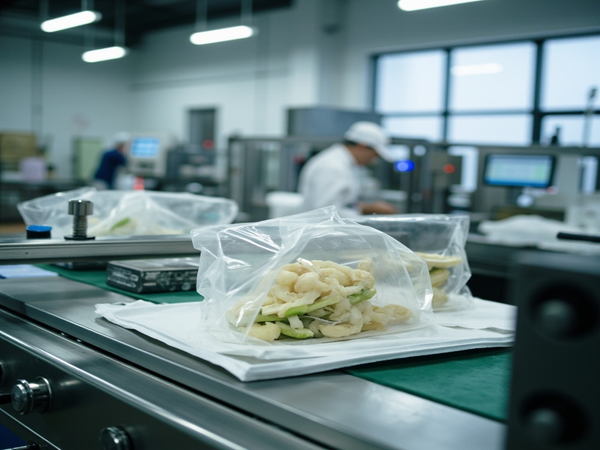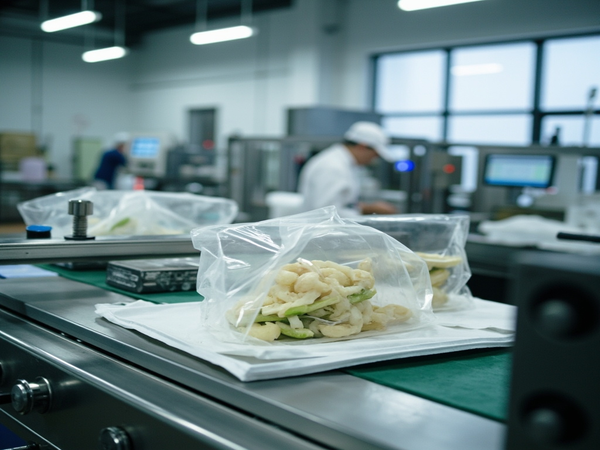
More than half of the loss between field and table for agricultural products happens within the first few hours after harvest. Grading, pre-cooling, bagging and loading follow each other in quick succession with almost no buffer in between, which turns post-harvest packaging from a simple "put it in a bag" step into a technical process with a narrow time window. For food packaging companies, that means demand is shifting from "can it hold the product" to "can it suppress the loss."
One. The time gap around packing decides how much product is lost
Freshly picked produce carries field heat, and respiration peaks while it cools down in transit. The industry has largely settled on one sequence: pre-cool first, pack second, move into cold storage third. The order cannot be reversed. If packing happens before cooling is finished, condensation forms inside the bag and moisture settles on the fruit surface, which actually accelerates microbial growth. If packing happens after the produce has been stored, the product has already lost moisture, and wrapping it only preserves the dried state. When pre-cooling is done ahead of time, packaging genuinely performs the job of holding moisture and quality in place.
Two. Three typical packaging methods at the production site
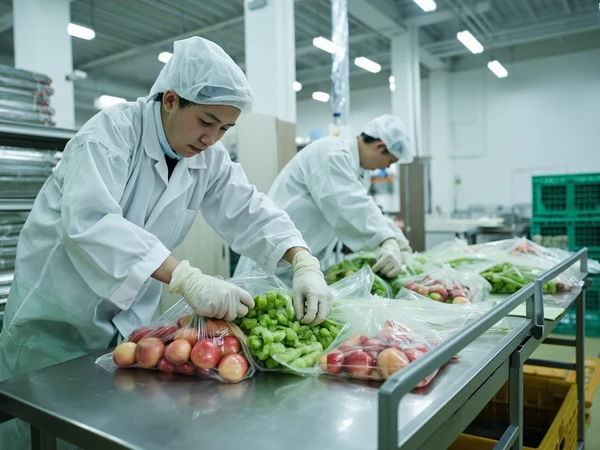
The first is single-fruit or small-portion wrapping, where transparent film is applied closely to the surface of the fruit to reduce water loss and bruising. Citrus, apples and peaches with firmer skins are usually handled this way. The second is multi-piece bagging, where sorted produce of the same specification is packed by weight or count into clear bags, which simplifies weighing and pricing at retail and makes the product easy to sell bag by bag. The third is perforated breathable bags for leafy greens, asparagus and mushrooms, where respiration is intense and openings are needed so that carbon dioxide does not build up and turn the produce yellow.
Three. Film specifications should match the category rather than simply getting thicker
Whether a film is suitable usually comes down to four indicators: whether the thickness is even, whether pinholes or gel particles are present, how well it stretches and adheres, and how it performs in terms of haze and light transmission. Leafy greens respire actively and need perforations and high light transmission so they do not yellow in the dark. Root vegetables and berries respire slowly, so barrier and cling properties matter more, keeping the product from losing water or picking up neighbouring flavours. Simply making the film thicker raises cost without solving condensation or bruising, and it only prolongs the humid environment inside the package.
Four. Food contact safety is the baseline requirement
Cling wrap and ziplock bags touch food that is eaten directly, so raw material compliance, ink safety and odour migration control all belong in supplier assessment. Packing at the production site often happens in greenhouses or temporary storage sheds, where packaging material may be stacked carelessly and exposed to sun and rain. Buyers are now writing the storage conditions for packaging material at the production site into their acceptance clauses as standard practice.
Five. Evaluation is shifting from unit price to the cost of loss
When production sites calculate the value of a truckload, they now weigh packaging investment against recoverable loss: spending a few cents more per bag makes sense if it reduces damage during transport and on the shelf by even one percentage point. The build-out of pre-processing centres and production-site warehouses is also turning standardised packaging from an improvised measure into a long-term configuration.
Overall, post-harvest packaging is becoming the link between the growing end and the retail end. For a food packaging company to win in this round of demand, the decisive factor is not making the bag, but understanding respiration patterns, pre-cooling rhythms and storage conditions, and delivering solutions that actually work in real production-site environments.