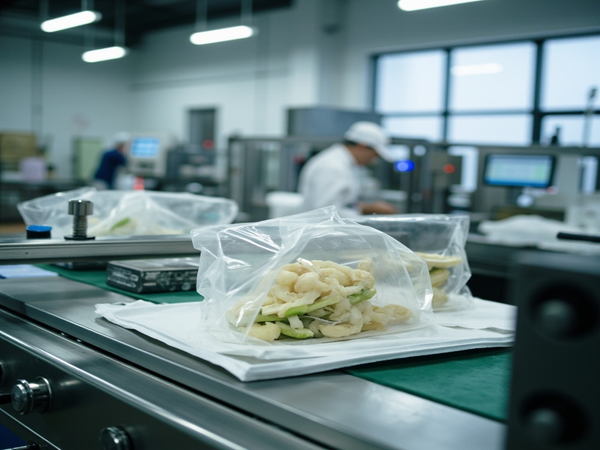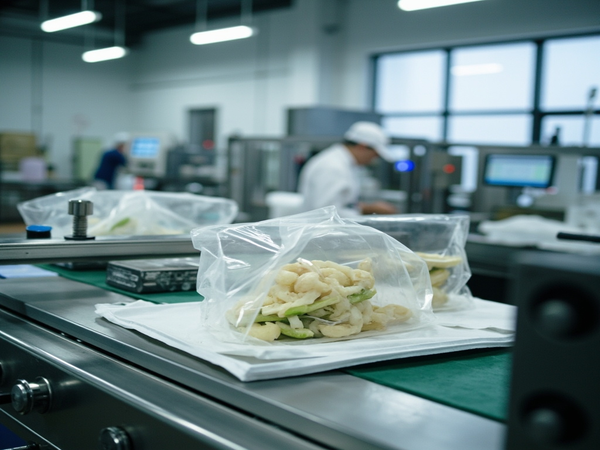
The food packaging industry is shifting from supplying by product category to supplying by supply chain scenario, and the baking chain is one of the most concentrated areas of that change. Chain bakery brands widely run a central kitchen plus bake-in-store structure: doughs and fillings are pre-prepared and frozen in a central kitchen, while outlets only handle proofing, baking and decoration. Once production is concentrated upstream, packaging stops being a generic consumable for the outlet back kitchen and becomes a production material that has to be configured together with the central kitchen line. Delivery rhythm, pre-cut format and batch consistency directly affect how many products an outlet can put out in a day.
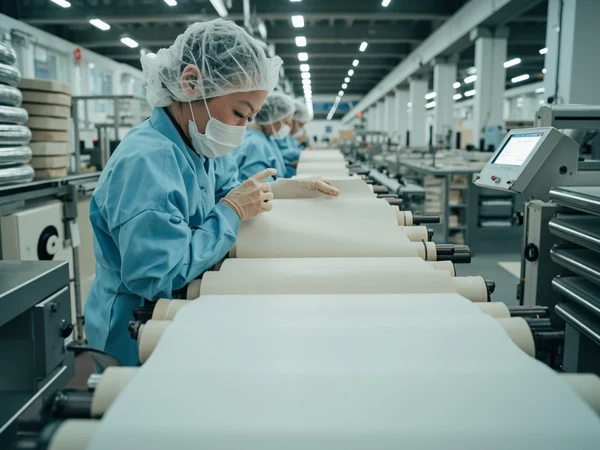
In that setting, baking paper is judged by release performance and batch stability. Tray liners have to withstand grease penetration under high-heat baking conditions, and the uniformity and bonding strength of the silicone coating determine whether products stick to the tray and whether demolding runs smoothly. The faster the line runs, the more demanding the requirements for thickness consistency and roll flatness become: local variation within a single roll shows up directly as a difference in baking results from one batch to the next, which is exactly why chain customers pull baking paper into their line-configuration lists.
The value of aluminum foil concentrates in insulation and barrier performance, which is what separates it from paper-based materials. Used as tray liners, inner wrapping for baked goods and gift box inserts, aluminum foil must stay rigid at high temperature so it does not collapse and distort the product, while delivering more reliable grease isolation for high-fat pastries. During long-distance transport of frozen baked goods, foil-based structures also further reduce moisture migration and shorten thawing time once the goods reach the outlet, a requirement that did not exist when baking happened mostly in store.
The change on the demand side shows up in compliance thresholds. Baking paper in direct contact with food must comply with the relevant national standards for food-contact paper and paper products, so raw material sourcing, coating substances and migration limits all become mandatory checks for buyers. As purchasing decisions concentrate in a small number of head offices, suppliers with stable testing capability and batch traceability find it easier to enter core supplier lists, and compliance shifts from being a product attribute to being a supplier credential.
For packaging converters, service capability has to move from being able to produce to being able to support. A single roll specification rarely satisfies different production lines across a chain customer, so joint development around coating configuration, roll specification, pre-cut format and delivery cycles is becoming a new competitive frontier.