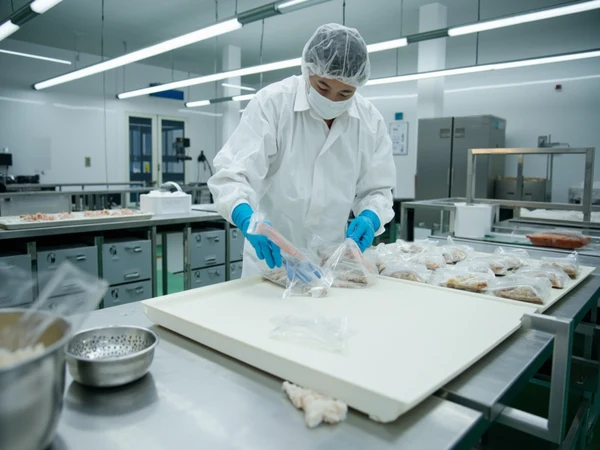
In home kitchens and commercial back kitchens, cross-contamination rarely happens through an obvious mistake. It happens quietly: hands that handled raw poultry reaching for a ready-to-eat cold dish; a cutting board rinsed only superficially and then used for cooked food; cut vegetables left open on the counter; a tray of raw meat stored below cooked food so the drips fall the wrong way. What these paths share is the same weakness: nothing physical stands between the source and the food.
Food packaging materials are exactly that barrier. Ziplock bags, cling wrap, aluminum foil and baking paper keep food away from hands, knives, work surfaces, juices and airborne particles. Whether that barrier actually works depends on two things: a seal that is genuinely tight, and air that has been expelled from the bag before closing.
- Where contamination actually comes from
Hands and tools are the first source. Raw poultry, eggs and seafood carry microorganisms on the skin, in the cavity and around the gut. After processing, those organisms sit on fingers, knife spines, in the grooves of a cutting board, around the rim of a mixing bowl and in the cloth used to wipe the surface.
Second, juices and splashes. Cutting pushes meat juices and cell liquid across a radius of tens of centimeters. They land on the worktop, around the stove edge, even on clothing. Wiping away the visible liquid does not remove what sits in the seams.
Third, open exposure. Cut vegetables, sliced cooked food and an opened cake left uncovered collect airborne particles and respiratory aerosols continuously, and the load becomes measurable within a few hours.
Fourth, and most easily overlooked, backflow. Drip trays and condensation in a refrigerator can drip onto food stored below.
- How packaging closes each path
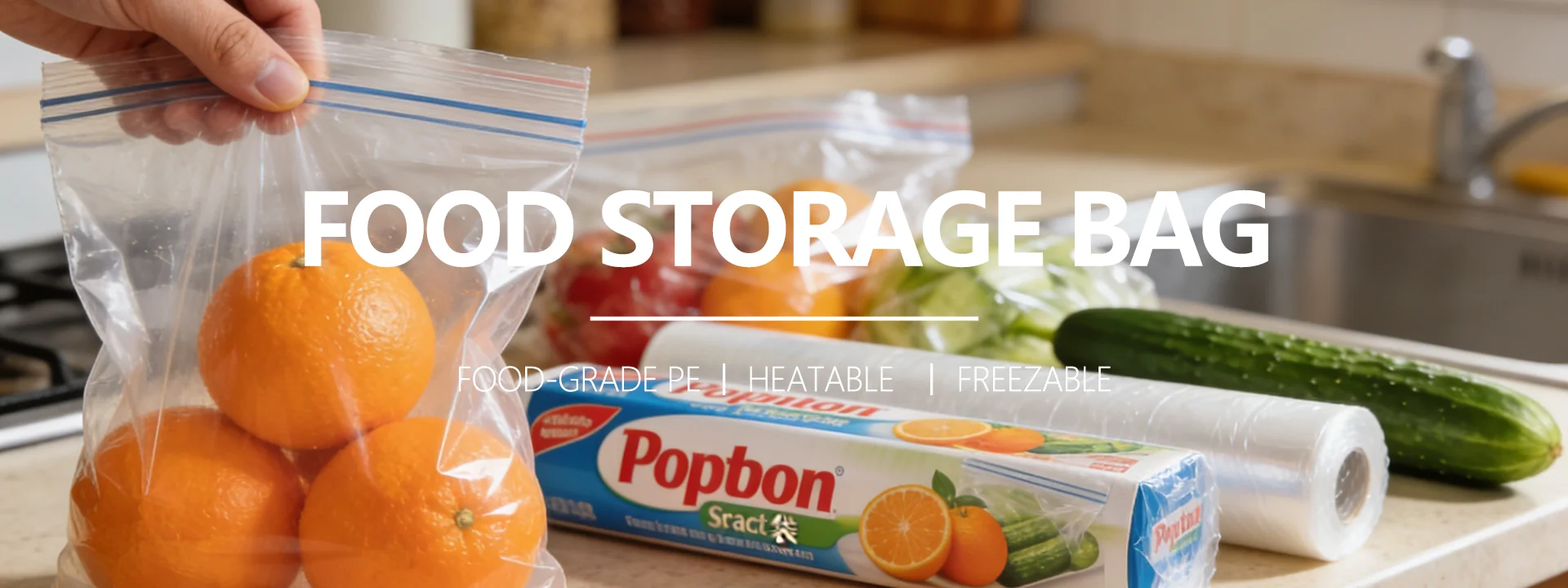
Ziplock bags turn cut-and-store into the default action. As soon as ingredients are portioned, they move straight into a bag and are sealed, so hands and worktops no longer touch the food itself. Transparency is a practical advantage: you can confirm what is inside and what condition it is in without opening the bag. That removes the "forgot what this was and how long it has been there" problem, and it also removes the repeated opening and closing that invites a second round of contamination. Segment the bags by category: one for poultry, one for raw meat, one for produce, one for cooked food, using different colours so the wrong bag is easier to spot.
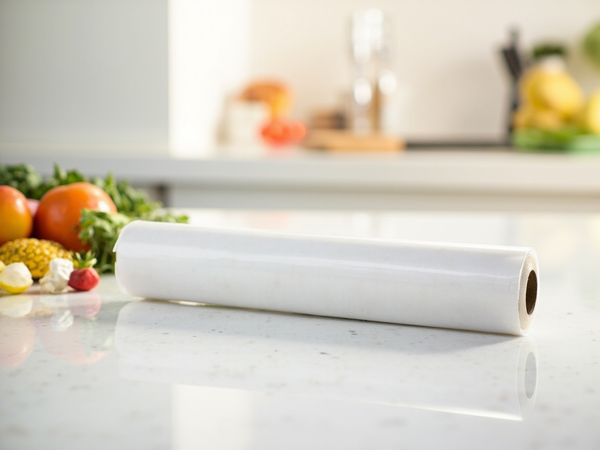
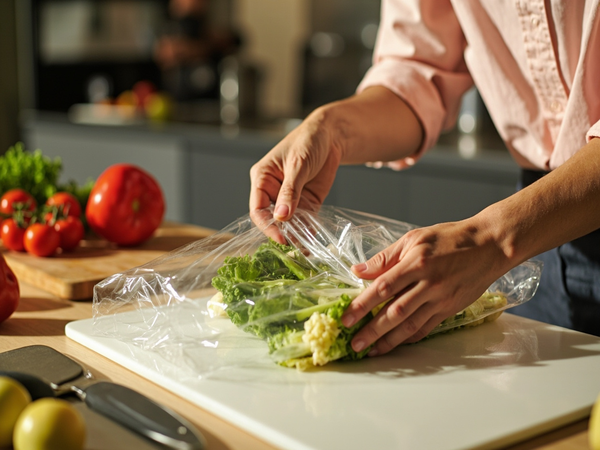
Cling wrap adds a cover over anything cut or open, and three details decide whether it works. Press it down to the edge of the container with no gaps, because gaps become an entry channel for moisture and particles. Do not reuse a sheet; one sheet covers one portion and is then discarded. And do not stretch it so tight that all the air is gone, because PE cling wrap needs a little slack to adhere; a wrap that settles naturally after the air is pushed out usually holds better than one pulled taut.
Aluminum foil and baking paper take on the high-moisture and high-fat cases. Freshly baked goods carry both water and oil, and go soggy or greasy when left exposed; separating them with baking paper while keeping the surface ventilated reduces condensation and oil transfer. Where longer storage or light and aroma exclusion matter, aluminum foil performs better because it blocks light, slowing both moisture loss and the oxidation of surface oils.
- Rules for portioning and storage
Portion once, into one container per portion, so nothing is repeatedly opened and closed. Push out excess air before sealing: the smaller the air volume inside, the smaller the environment the food is exposed to. In the refrigerator, keep raw below cooked, and use ziplock bags to catch the drips that would otherwise fall onto food below. For freezing, portion first and freeze second; freezing a whole piece and splitting it later means repeated thawing, which measurably raises the risk. Let cooked food cool before sealing, because sealing food while it is still hot traps a humid environment inside the bag and the condensation that forms makes conditions worse, not better.
- When the packaging should be replaced
Replace a ziplock bag as soon as it is torn, the seal strip deforms, the body smells off or the film starts to stick to itself. Replace cling wrap when it shrinks noticeably, splits, or clings so tightly that it tears when pulled apart. Packaging is a consumable, not a container. Keeping "reuse" and "re-wash" clearly separated matters more than saving a single bag.
- Three points for buyers and users
Look at material and specification first. Match thickness and size to the contents, and for single-portion packing choose a smaller bag with a wide enough opening. An oversized ziplock bag leaves more air inside and seals less evenly, which works against the barrier rather than for it.
Second, look at visibility. Clear packaging reduces the need to open and check, and that is part of the hygiene value of the package as well as a practical advantage of ziplock bags over opaque ones.
Third, set the boundary between single-use and reusable. Single-use portion bags are discarded after use, which moves the risk of re-washing out of the process entirely. Reusable silicone bags need high-temperature disinfection and complete drying before the next use, and the two systems should not be mixed.
Packaging cannot replace hand washing, cleaning and separating raw from cooked. What it can do is turn "what has this food touched" from something invisible into something controllable. With the right material and the right method, the risk of cross-contamination drops noticeably.