Export Food Packaging: How Ziplock Bags, Aluminum Foil, Baking Paper and Cling Film Divide the Work Under Long-Haul Transit and Destination Standards
1. Export orders face packaging conditions that domestic short-haul distribution does not
The same food product leaving the factory goes through consolidation, container loading, ocean transit, port clearance and last-mile delivery. Each step changes the conditions, and packaging problems grow with every change.
- Long transit with temperature and humidity swings: ocean transit can run for several weeks, and repeated temperature and humidity changes keep the package under continuous stress as materials expand and contract inside the carton, with the bag mouth and the seal affected first.
- Stack and handling pressure: in a full container load, lower cartons carry the weight of everything above them, and cargo handling adds drops and compression, so bag body tensile strength and seal strength become the decisive indicators.
- Different destination standards: markets differ in their rules on food contact materials, label language, ingredient declaration and importer responsibility, so one packaging format rarely works across several markets.
- More handling cycles: export goods are moved repeatedly between channels and retailers, and every opening and restacking tests the seal again.
2. Four materials, four roles on the export line
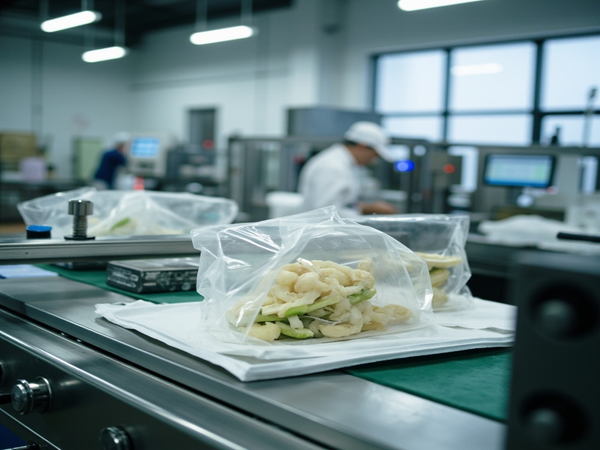
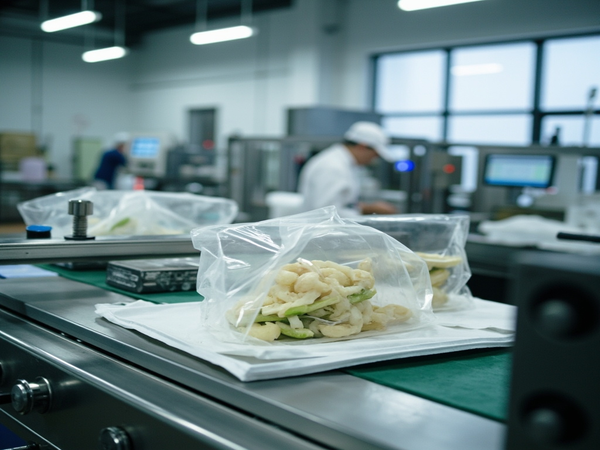
- Ziplock bags: the main carrier and moisture barrier. Three parameters decide the choice: whether the bag body is thick enough to survive compression during long transit, whether the seal strength holds through repeated opening, and whether the opening width matches the speed of the portioning line. Consistent ziplock bag sizes also keep changeover losses low.
- Aluminum foil: the key layer for light blocking, oxygen blocking and aroma retention. Over long ocean routes, colour, aroma and flavour are the first things lost to light and oxygen. Aluminum foil can wrap the product directly, form the inner liner of a composite bag, or serve as a light-blocking sealing layer, solving light, oxygen and moisture control in one move.
- Baking paper: absorbing layers and separators. Baked and oily export products tend to seep oil, stick together and pool liquid at the bottom of the carton. Used as a liner or a separator, baking paper absorbs the exudate and keeps products intact and presentable.
- Cling film: in-plant transfers and short-cycle covering. Between portioning and casing, and for the temporary cover of a tray during staging, a film with good cling and stable stretch recovery is what keeps dust and moisture out.
3. Control points along the export flow
- Portioning and sealing: remove as much trapped air as possible from the ziplock bag. Excess air expands as temperature changes at sea, which puts extra stress on the seal and can lead to leakage or bulging bags.
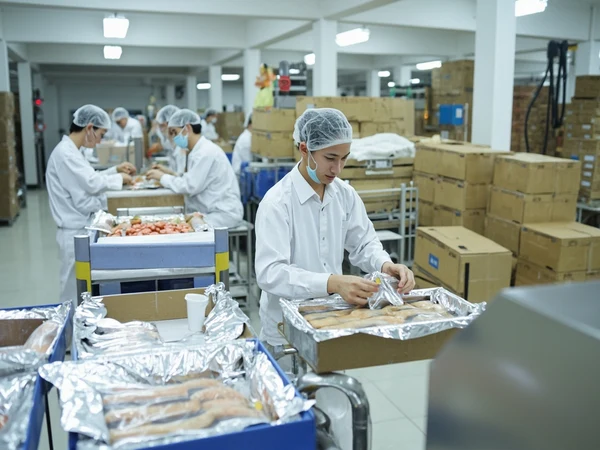
- Lining and casing: aluminum foil liners should sit flat against the product so they are not punctured when the load shifts, and baking paper separators should keep products from adhering to each other inside the carton.
- Cartons and stacking: carton load strength and tier count must be calculated against the actual container stacking plan. The higher the stack, the more the lower cartons deform, which directly affects the seal and bag strength on the inside.
- Transit and arrival: sample-check seals, carton condition and label legibility after the voyage before the goods enter clearance.
4. Five things to confirm before placing an export order
- Food contact compliance documents: make sure the material, additives and migration testing cover your specific product and process, and cover the destination market requirements.
- Material parameters matched to transit conditions: validate bag compression and seal strength against the actual transport mode, voyage length and stacking tiers, instead of relying on generic laboratory data.
- Destination labelling and language rules: confirm ingredient listing, allergen statements, net weight and country-of-origin format in advance, so no relabelling is needed after arrival.
- Batch traceability and retained samples: keep samples per order and batch so that quality disputes after export can be traced back to a specific material batch.
- Match with line equipment parameters: roll width, bag length, opening width and case dimensions must line up with the portioning, sealing and casing equipment parameters, otherwise the loss ends up in the order cost.