Antimicrobial and Active Packaging Move into Production: Food Packaging Shifts from Passive Barrier to Active Preservation
Driving oxygen and moisture transmission rates down has been the main lever for extending shelf life over the past two decades. The logic is essentially passive barrier: the pack does not act on the food, it simply keeps the outside world out. But once barrier performance approaches the limit of the material, shelf life stops extending, because what actually constrains shelf life is rarely permeation — it is the microorganisms already multiplying on the product surface and the condensation generated along a cold chain.
That is the point at which antimicrobial and active packaging moved from the lab onto the line. Active packaging changes the microenvironment inside the pack by releasing or absorbing a substance — oxygen, carbon dioxide, moisture — while antimicrobial packaging inhibits microbial growth by adding or coating an antimicrobial agent onto the material. Neither alters the food itself, yet both lift the shelf-life ceiling.
Three Routes in Active Packaging
Oxygen scavenging is the most mature. Scavengers based on iron or enzyme systems convert residual oxygen inside the pack into iron oxide or otherwise fix it, aiming to push oxygen concentration below the threshold at which microorganisms can multiply. The critical variable is not whether oxygen can be removed, but whether the scavenging rate matches the respiration rate of the product: too fast and flavors are oxidized, too slow and the scavenger is exhausted before the end of shelf life. Desiccants and deoxidizers are used where sealing is tighter and exchange with the outside is close to zero.
The carbon dioxide route runs in two directions. Releasing systems keep CO2 at a concentration that suppresses aerobic bacteria and molds; absorbing systems continuously draw excess CO2 out, preserving flavor in products with high respiration. Modified atmosphere packaging works by backfilling a fixed gas ratio; active packaging works by letting the pack regulate itself. The latter demands far less equipment change and suits smaller batches and many-SKU orders.
Moisture control is often underestimated. Absorbers and dehumidifier pads lower relative humidity inside the pack and suppress condensation and mold growth. The opposite approach — moisture-balancing pads and humectant films — keeps cut fruit, vegetables and baked goods from losing water and wilting on shelf. Here the technical difficulty lies less in the material than in matching it to the moisture-release curve of the product.
Antimicrobial Packaging: From Application Method to Evaluation Protocol
Antimicrobial agents fall into three families. Organic acids such as citric acid and sodium benzoate are cost-effective and well understood. Natural essential oils such as cinnamaldehyde and menthol carry a natural-origin story but are volatile and less stable. Inorganic and metal-based systems, including silver ion and zinc-based materials, tolerate heat and last longer but face stricter cost and compliance review.
The application method decides both cost and performance. Adding antimicrobial masterbatch directly into the extruded layer is the cheapest and most line-friendly route, but the compound must survive processing temperatures and subsequent coating, printing and heat sealing. Two-layer structures put the antimicrobial layer on the product-facing side for more direct action, at the cost of extra layers, higher material use and more waste. Coating suits film products such as cling wrap: a thin antimicrobial layer on the base film gives precise control, including partial or single-side coating, but it puts tight demands on coating uniformity, adhesion and the downstream heat-sealing window.
On evaluation, antibacterial rate is the common industry measure: the target microorganism is inoculated onto a specimen piece, the piece is treated, cultured under standard conditions, and colonies are counted to compute inhibition. A supplier reporting to a customer should state the challenge organism, contact time and temperature, sample conditioning and the control setup — a bare percentage on its own carries no information.
Where It Lands: Ziplock Bags, Cling Wrap and Foil
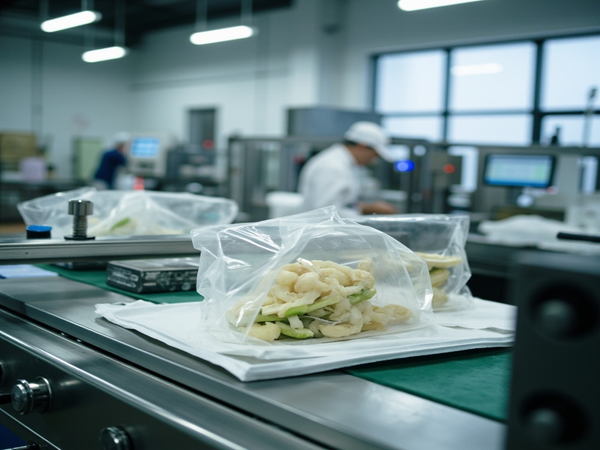
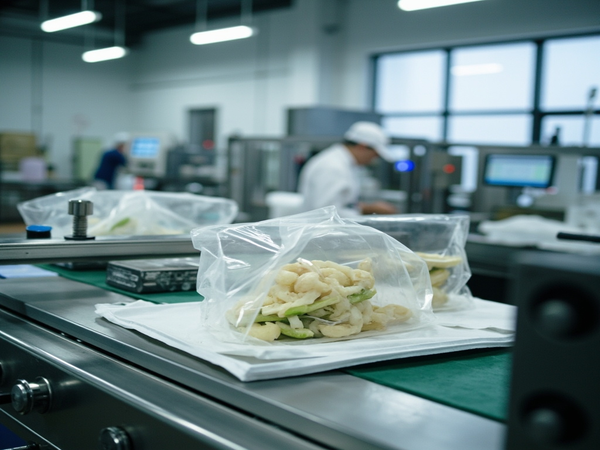
Ziplock bags: adding antimicrobial masterbatch into the multilayer extrusion is the most economical approach and suits chilled ready-to-eat meals, fresh-cut vegetables and portioning. The film still needs to stay tough at cold-chain temperatures, and seal strength remains the priority — otherwise leakage cancels out any antimicrobial benefit.
PE cling wrap: antimicrobial coating has a clear retail application in surface film over ready-to-eat dishes and chilled meat, suppressing surface flora during display. The trade-off is a higher cost than standard film and stricter demands on operator hygiene and tear feel.
Aluminum foil and foil laminates: foil already provides strong barrier and light protection, and combined with an oxygen scavenger it remains the classic solution for ambient ready-to-eat foods and outdoor scenarios. The key is when the scavenger is triggered — it must wait until product temperature has fallen and condensation has formed, or it will take the flavor with it.
Baking paper: anti-mold coatings and moisture control are used to manage the shelf life of baked goods, where coating uniformity determines unwind stability and printability, making the process window of the silicone coating line decisive.
Five Practical Barriers to Adoption
Regulation and permitted-substance lists. Whether an active or antimicrobial compound may be used in food contact materials depends on local positive lists and migration limits, requiring migration trials and toxicological evaluation. A natural origin does not mean a simpler approval path.
Cost and willingness to pay. Functional packaging costs noticeably more per unit, and customers pay for it only when the additional shelf-life days translate directly into lower spoilage or faster turnover.
Difficulty of verification. What the customer sees on the shelf is only that the product has not spoiled; it is hard for them to judge whether the active system is actually working. Accelerated shelf-life data and third-party laboratory reports become part of the supplier's deliverable.
Temperature sensitivity. The release rate of an active agent and its inhibition efficiency both change when a pack moves from a cold cabinet to a room-temperature shelf, so the pack should be designed for the worst-case temperature.
Matching the agent to the product. Different microorganisms vary widely in sensitivity, and yeasts and molds tolerate organic acids considerably better than bacteria do. The target flora has to be defined before effectiveness can even be discussed.
Where Baodafor Fits
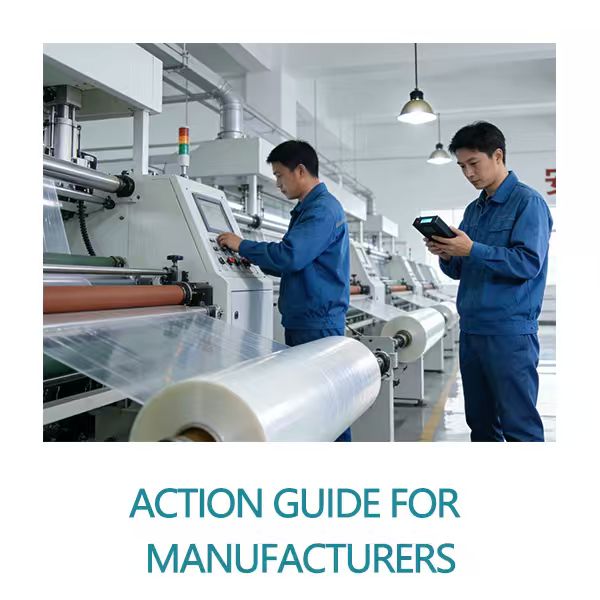
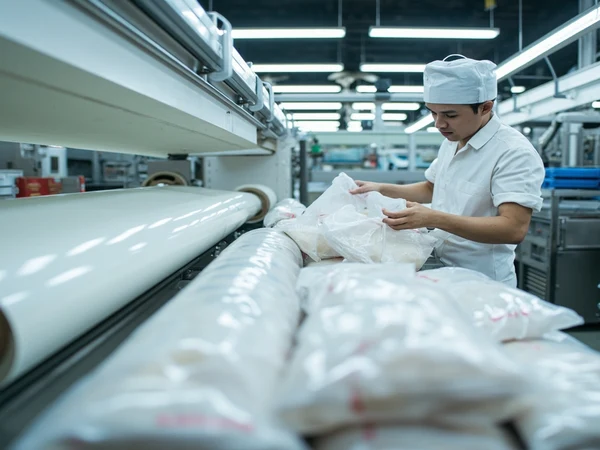
Xiamen Baodafor New Material Technology Co., Ltd. covers ziplock bags, PE cling wrap, aluminum foil and baking paper, with in-house blowing, bag making, coating, printing and slitting through to final packing. The hard part of antimicrobial and active packaging is joint tuning across material, process and the customer's actual product — a condition that favors factories with multiple categories under one roof and the capacity to run small trial batches. For one customer, different product categories can move through sampling, verification and mass production inside a single quality system.
Looking at the pace of the industry, functional packaging is moving from a niche trial by a few premium buyers toward a standardized product option. As downstream operators evaluate spoilage and shelf life in ever finer detail, the converter's role shifts from supplying material to supplying an answer: how to reduce loss for a given shelf life. That is one of the most worthwhile directions for food packaging in the coming years.