Prepared tea and coffee are moving from single-store businesses toward chain-network businesses. Once store density rises and daily output concentrates in fewer, higher-volume locations, the role of packaging consumables quietly changes: the cup sealing film stops being an optional accessory and becomes a mandatory consumable consumed with every single cup.
1. On the demand side: more sealing formats, non-discretionary consumption
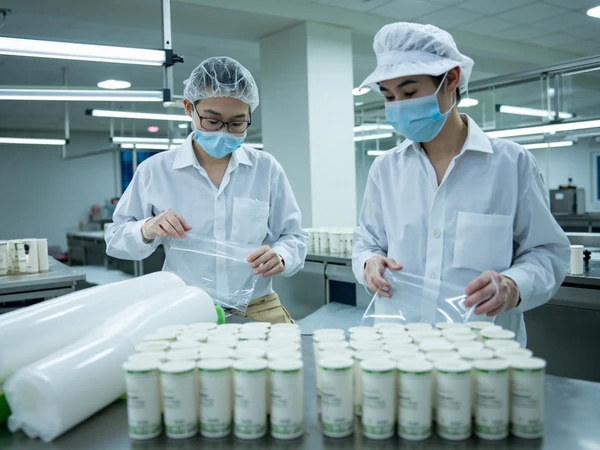
Hot drinks use a sipping film, cold drinks use a sealing film combined with a lid, and every cup diameter needs its own film size. When takeaway cups, travel mugs and sharing cups run in parallel, one brand ends up managing far more sealing formats and film specs than it did before. For suppliers this also changes the order pattern: demand moves from seasonal swings to daily consumable replenishment, so food-grade PE film volume grows in step with the store network rather than with promotional cycles.
The second structural change is the shift from one cup size to many. A chain that serves a small hot cup, a standard cold cup and a large iced drink has to hold three or more sealing parameters at the same time. Every new cup type means new film parameters, new qualification cycles and new replenishment lines. Film consumption therefore scales with menu complexity as much as with store count, which is why chain expansion pulls the whole sealing film category into a growth phase.
2. On the product side: three technical lines decide whether a film is actually usable
Sealing compatibility. A hot sipping film is judged by its heat-sealing window and temperature resistance; a cold sealing film is judged by cold-seal strength and the flatness of the cup rim. Because cup bodies come in PP, PET and other materials, the rim formulation and sealing parameters cannot be shared across cup types. The film compound has to be tuned for each cup format, and a supplier that only sells a generic film will quickly run into sealing failures at high-volume stores.
Durability in real use. A cold drink with ice has to survive low-temperature shock without becoming brittle and cracking. The film must not tear or lift when a straw is pushed through or a lid is snapped on. During peak hours, films also sit in stacked delivery bags and travel through bumpy courier routes, so the seal must stay intact long after it leaves the counter.
Food contact safety. The film touches the beverage directly, so raw material compliance, odor and taste migration, off-gauge control and printing ink migration are all hard requirements. The share of recycled content and the stability of the melt flow index directly determine how consistent the sealing window is from batch to batch, and an inconsistent window shows up as leakage at the store, not in the factory.
3. On the supply chain side: consistency matters more than price
For chain brands, the question for suppliers has shifted from "can you make it" to "can you make it consistently over time". Batch consistency, core quality and slitting precision, line feed speed, response time when supply is interrupted, complaint traceability and the ability to recall a suspect batch all affect store-level shelf availability and waste rates directly. A single supply interruption or a mixed batch label multiplies rework and recall cost across a whole chain.
For film suppliers this means the real competition happens in process control rather than in unit price: incoming material inspection records, melt index monitoring, thickness tolerance control, in-line seal testing, and retained samples that allow a specific roll to be traced back to the production window it came from. Suppliers that can produce a repeatable parameter set across a whole year, not just a single accepted sample, become the default choice for chain accounts.
4. What it means for packaging material suppliers
Turning cup sealing film from "a generic consumable bought on unit price" into "a custom package defined by scenario" is the more stable way for food-grade PE film makers to enter this market. The sequence matters: first define the drink type and cup format, then match basis weight, thickness, heat-sealing temperature range and feed speed, and finally lock the parameters with sealing tests, peel strength tests, temperature resistance tests and migration tests so the process becomes repeatable rather than experience-based.
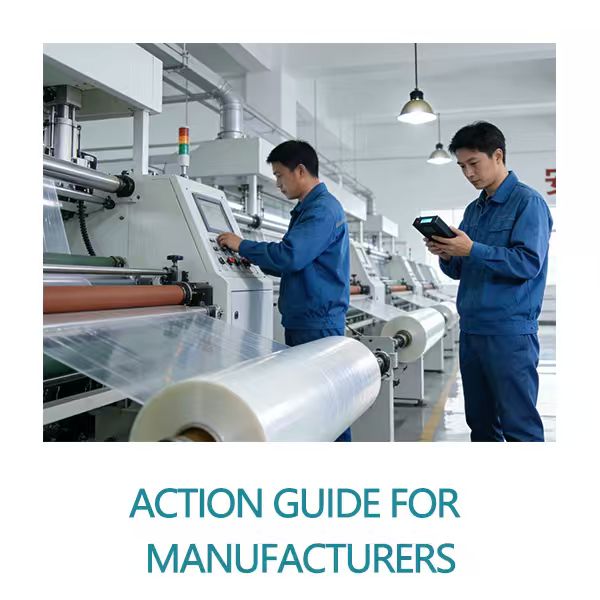
For Baodafor, the raw material processing, extrusion and casting, slitting precision and food-grade inspection capabilities built around PE cling wrap and ziplock bag production follow the same logic that cup sealing films demand: consistency that holds across batches. For chain customers, turning parameter definition, batch traceability and delivery assurance into standard procedures is worth more than competing on price alone, and it is the more realistic path to long-term cooperation.