Confectionery Packaging Goes Premium: How Aluminum Foil Protects Shelf Life and Shelf Appeal
1. Light is the first flavor killer in chocolate and candy
The aroma and mouthfeel of chocolate and candy are among the most light-sensitive qualities in the food world. Cocoa butter oxidizes when light and oxygen act together, producing off-notes and a rancid taint; the pale bloom on the surface of a chocolate bar is cocoa butter crystallizing out after light has broken down the fat structure. Inflated candies, filled chocolates and fruit hard candies react the same way: a few weeks under retail lighting is enough for the aroma to fade noticeably.
So when confectionery brands push into the premium tier, the first investment in packaging is often not heavier paper but the layer nobody can see. Can light be kept from the product? Can oxygen be kept out? Can the aroma be locked in? That is exactly why aluminum foil has become so central to this category.
2. The three jobs aluminum foil does in this packaging
Light blocking comes first.Aluminum is a metal layer, so light passes through it almost not at all: a few microns of foil drives light transmission close to zero. Premium dark chocolate bars, inflated pillow packs and twist-wrapped sweets all carry a foil or metallized layer, and the reason is not a metallic look. It is that on the shelf, for the months the pack will sit there, the content stays in an almost dark environment.
Oxygen barrier comes second. Oxygen is the trigger for fat oxidation. Foil on its own has an extremely low oxygen transmission rate, and once laminated with paper or plastic it supports shelf life statements measured in months or even seasons. The same layer protects nut and seed snacks and filled bakery products, which is why foil laminates have held their place on premium shelves for so long.
Moisture and aroma are the third job. In a laminate, the sealing layer does the closing, the aluminium layer does the blocking, and the paper or PET outer layer does the printing and stiffness. That multi-layer build stops moisture migration and also stops different flavours on adjacent shelves from exchanging aromas. Mint sweets do not hand their scent to the cream caramels next to them because of that one layer.
3. Structure and process: laminate layers, sealing zone and printing zone
A foil laminate is not a stack of sheets put together. Function is allocated layer by layer: the inner layer provides food contact and heat sealing (commonly PE, CPP or PET), the aluminium layer in the middle provides the barrier, and the outer paper or PET layer provides printability and stiffness. The right question to ask a supplier is what each layer does, not which pack is thicker.
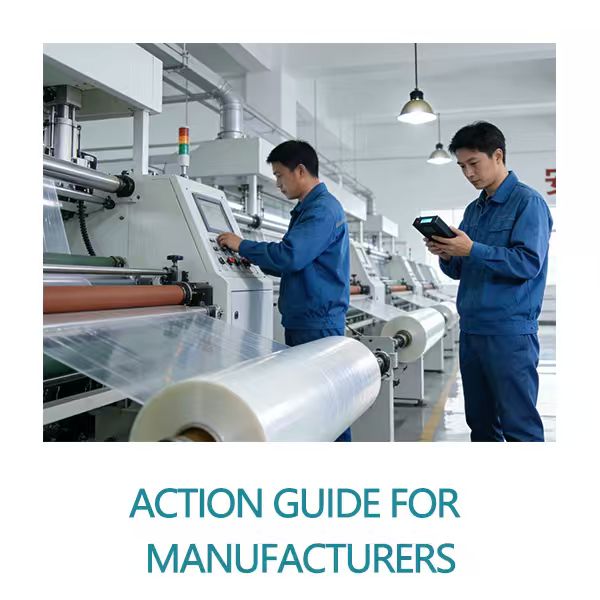
The sealing zone is where this construction is most delicate. The aluminium layer cannot itself be heat sealed; sealing depends on the inner sealant layer, and the process window is much narrower than for plain PE film. Too low a temperature gives a weak seal; too high a temperature pushes sealant out of the joint, causes wrinkling and can even perforate the foil. Parameters should be set on the actual jaw temperature rather than on the panel reading, and first-article checks should include a pull test and a leak test.
The printing zone is designed separately from the sealing zone. Foil cannot be printed directly; it is normally treated by coating or plating first, and the printed area is kept clear of the seal so that inks and surface treatment never interfere with seal strength. Consistency matters just as much: small drift in grammage, in the thickness of the lamination or in coating uniformity shows up immediately as a visible difference between batches on the shelf.
4. One foil, different jobs across categories
Chocolate bars. Foil wraps the individual piece or forms the inner tray before the bar goes into a carton, combining light blocking, oxygen barrier and a clean opening experience. Gift boxes often add baking paper as an inner divider and support for the arrangement.
Inflated pillow packs. Foil laminate is formed into a pillow pouch and inflated to give the pack its shape, so gas transmission and barrier performance have to be met together. Get the balance wrong and the pack collapses on the shelf within weeks.
Filled chocolates. A transparent window is often wanted to show the filling, which usually means combining a foil laminate with a clear PET window area, keeping the visual display and the light protection at the same time.
Twist-wrapped sweets. Foil or metallized film is heat sealed and then twisted; the foil provides light blocking and aroma locking, while the strength of the twist and the direction of the crease decide whether the pack stays flat on the shelf.
5. Where ziplock bags, cling wrap and baking paper fit in
Confectionery is never just one layer of packaging. In the packing stage, ziplock bags take the role of the family pack and the bulk repack: once the outer pack is opened, moving the contents into a ziplock bag measurably reduces the aroma loss and moisture pick-up that repeated opening causes. For short-term protection of fruit candies or filled pieces, PE cling wrap covers and separates the product. In gift and bakery channels, baking paper works as an interleaver, divider and anti-stick sheet, supporting the shape while keeping oily sweets from touching each other.
Aluminum foil, ziplock bags, cling wrap and baking paper are not substitutes; they sit at different stations on the same packing line. For a brand, having the whole set of materials specified together, with consistent usage guidance, removes far more packaging complaints online and offline than comparing unit prices does.
6. Compliance and consistency for retail and export audits
A large share of confectionery goes through export and chain retail channels, where material review is stricter than for ordinary packaging. The food contact layer has to meet the migration requirements of the relevant regulation, printing inks and surface treatment must not transfer to the food, and every layer of the laminate has to be identifiable and described. Brands changing suppliers normally ask for material declarations, migration test results and batch consistency records.
This is also where a supplier's range becomes valuable. Baodafor supplies aluminum foil, ziplock bags, PE cling wrap and baking paper, so it can cover several stations of the same packing line and provide sealing parameter guidance and first-article confirmation methods for different categories. For export orders, solving several materials and their process parameters in one place is often worth more than a quote on a single material.
7. A selection checklist for buyers
Set the priorities by category first. For chocolate bars, light blocking and oxygen barrier come first. For inflated pillow packs, add gas transmission and stiffness. For twist-wrapped sweets, look at seal strength and crease behaviour.
Evaluate the laminate, not the single-layer gauge. Confirm which layer seals, which layer blocks and which layer prints, and ask for the specification of each layer and the total gauge.
Ask for the sealing parameter table and the first-article method. A sample photo proves nothing; the process window and the confirmation method decide whether the line can run consistently.
Write consistency into the purchase terms. Batch variation ranges for grammage, thickness, haze and seal strength need to be stated as measurable numbers.
Check the recycling route and the target market rules. Aluminium is highly recyclable, but the handling of the complete laminate and the regulations of the destination market still have to be confirmed.