

Categories
Tag: OEM manufacturer
Found 84 article(s)
Setting the Heat-Seal Window for Ziplock Bags: How Temperature, Pressure and Time Balance Seal Strength Against Premature Sealing
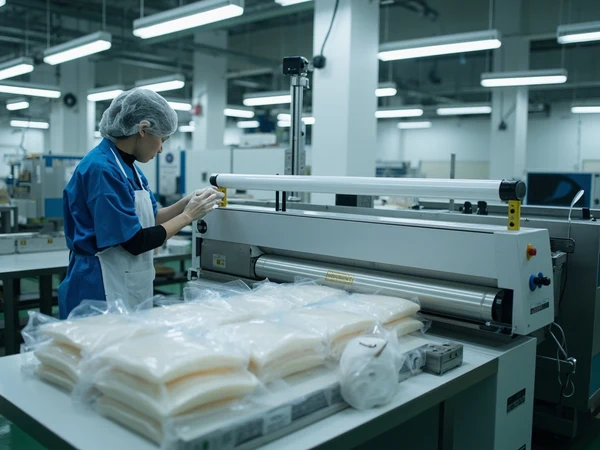
When the same roll of ziplock film behaves differently on different sealing machines, the cause is rarely unstable material: heat sealing is a window, not a point. The result is set by temperature, pressure and time, which can compensate for one another, and what really determines usability is how wide the working range can be before something goes wrong. The lower boundary is a weak seal and leakage, the upper boundary is a sticky mouth and premature sealing. Melt flow rate, slip additive deposit, gauge and structure on the material side, and band material, sensor deviation and cooling on the equipment side all move or narrow that window. This article walks through stepped qualification to find the plateau, the investigation order for four common defects, and the parameter guidance sheet and first-article confirmation used with customers, showing how a heat-seal window becomes handoverable data instead of operator memory, so ziplock bags seal reliably, seal well and stay stable batch to batch on the customer line.

Baodafor Builds a Shopfloor Improvement Suggestion System: Turning Problems Found on the Line into Measurable Gains in Material Loss and Efficiency
Most problems on a food packaging line are seen first by the people standing at the station, and they only become improvements when a mechanism catches them. Baodafor has built a shopfloor improvement suggestion system: low-threshold suggestion cards at each station, a fixed monthly improvement day where process, equipment and production review items and sort them into raw material loss, equipment stability, efficiency gains, and safety and hygiene; every approved card goes through a controlled trial on one team or one batch, comparing material consumption per roll, scrap rate, changeover time and downtime, and only then is it written into a work instruction and copied to other lines; adopted suggestions are reflected on the team improvement board and carry the proposer's employee number when standardized. The improvements do not change the product design, only what the hands at the station do, and they reach customers as consistent dimensions, reliable seals and stable lead times.

Baodafor Standardizes Critical Spare Parts and Wear-Part Management: A Tiered List and a Shared Spare Pool Keep Downtime Controllable on Packaging Lines
On food packaging lines, downtime is usually consumed by waiting for parts rather than by the repair itself. Baodafor has separated critical spare parts and wear parts from ordinary consumables and manages them separately: tiering them into critical spares, frequently replaced wear parts and standard substitutable items, each with its own safety stock and replenishment rule; consolidating the heating tubes, cutter shaft bearings and extruder screens shared by several lines into one spare pool with a unified register; correcting replacement intervals from real issue data; preparing multiple qualified sources for critical parts with alternative models validated in advance; and tying every replacement to line release and first-article confirmation, with the record written into the spare parts register so that equipment availability and batch stability improve together.

Date Marking and Batch Coding on Food Packaging: Making Room for Traceability on Ziplock Bags and Cling Film
Batch numbers, production dates and storage conditions all end up on the package, yet the printable area is often the tightest space in a custom printed project. This article compares four identification positions - a reserved block on the front, the back information panel, a horizontal strip along the bag opening and the margins flanking the zipper - explains how the code position interacts with the seal line, the zipper track, the edge distance and oily contents, reviews how corona treatment and primer affect adhesion, why dark and matt areas are hard to read, how character specification must match the coding equipment, and how PE cling wrap ties batches through core labels and end-face printing. It also sets out test coding, first-article confirmation and segregation of wrong batches at changeover.

Baodafor Standardizes Gowning and Personnel Hygiene Entry Controls to Protect Food Contact Surfaces
In a food packaging workshop the first contamination source is usually a person. Baodafor applies one gowning and entry standard across its ziplock bag, PE cling wrap, aluminum foil and baking paper lines: five sequential steps from shoe change and hand washing to work coat, hairnet, mask and gloves; explicit replacement triggers; special entry rules for visitors and maintenance staff; and pre-shift confirmation, in-shift patrol, exception closure and record keeping. The article also explains how customers can write cleanliness clauses into quality agreements and verify the records during an audit.

Surface Treatment and Printability: What Causes Ink and Adhesive Failures on Ziplock Bags and Cling Film
Flaking ink, lifting labels and smudged codes are rarely a consumables problem; they usually point to insufficient surface energy on the film itself. This article explains surface tension, corona treatment and the sealing face, sets out the five usual causes of adhesion failure, describes three measurable checks for the shop floor, and shows how to write surface criteria into a purchasing technical agreement so both sides judge acceptance on the same numbers.

Baodafor Establishes Version Control for Process Documents and Work Instructions Across Production Lines
Outdated process documents are one of the most underestimated hidden quality costs on a packaging line. This article explains how a superseded work instruction turns into a batch of defects, and lays out the full mechanism Baodafor uses: four document categories under one numbering rule, six controlled steps for every revision, workstation error-proofing, and weekly checks with quarterly reviews.
Matching Packaging to the Line: How to Select Ziplock Bag and Cling Film Roll Width and Gauge for Automated Equipment
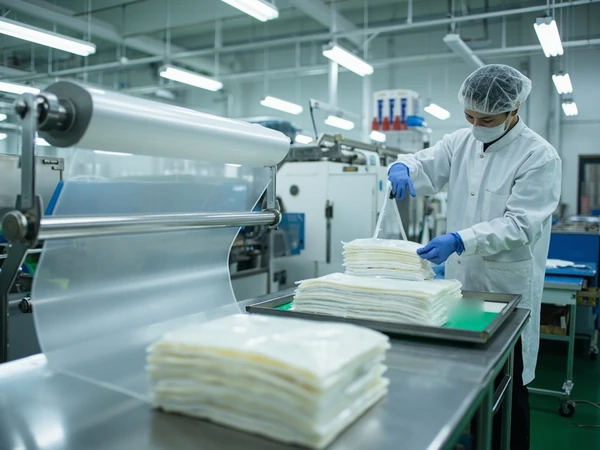
Automated packaging lines impose hard limits on packaging specifications. This article breaks down the four groups of machine parameters that frame the usable specification range, the use cases of three feed formats, six parameters that belong in the purchase specification, and where common faults such as web drift and sealing temperature drift originate.

Baodafor Standardizes Blade and Tooling Management in Slitting and Bag Making for Consistent Cut Dimensions and Seal Strength
Slitting and bag making are the steps in food packaging production most sensitive to detail. Baodafor brings blades and tooling into daily control through three nodes - issue and storage, pre-use inspection, scheduled replacement - combined with a reset and first-article confirmation after every change. The result is stable cut dimensions, edge appearance and seal strength across batches, with fewer returns and complaints.

Baodafor Builds Gauge Management and Periodic Calibration System to Improve Measurement Consistency and Batch Judgement Reliability
Baodafor places thickness gauges, bench scales and calipers used across the workshop and quality lab under unified ledger management, with defined calibration cycles, status labelling and intermediate verification rules that keep measurement data traceable and batch judgements stable.




