

Categories

Composite Barrier Bag Structures: How Foil Laminations Deliver Oxygen Barrier, Light Protection and Aroma Retention
Single-layer films hit a barrier ceiling. This article explains the five functional layers of a composite barrier bag, the key metrics such as oxygen and water vapour transmission rates, the effect of heat seal and peel strength, and the structure matching logic for tea, coffee, nuts, bakery ingredients and prepared meals.
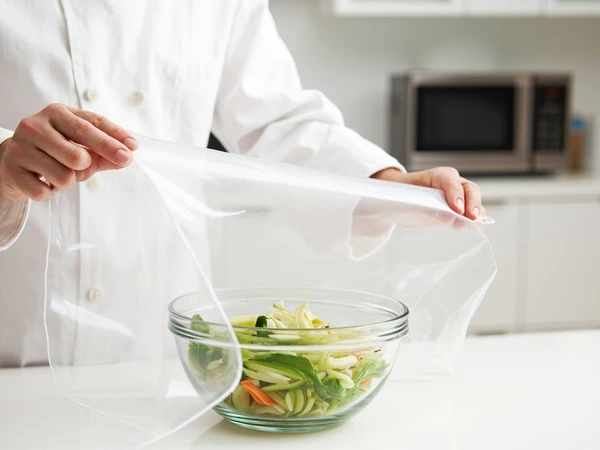
Heat Resistance of PE Cling Film: Practical Limits for Covering Hot Food and Microwave Heating
Heat performance of PE cling film depends on resin formulation, film thickness and contact conditions. This guide explains how to cover hot food safely, how to judge microwave suitability, and four practical rules for heating and storage.
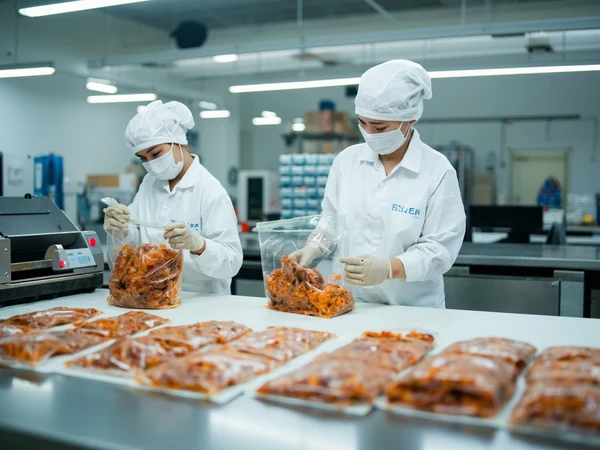
Oil Resistance of Ziplock Bags: How to Choose the Right Film for Braised, Fried and Sauced Foods
Oil seepage in ziplock bags usually comes from three paths: film permeation, seal leakage and pinholes. This article breaks down the variables behind oil resistance and gives practical guidance on film selection and packing steps for braised, fried and chilled oily foods.
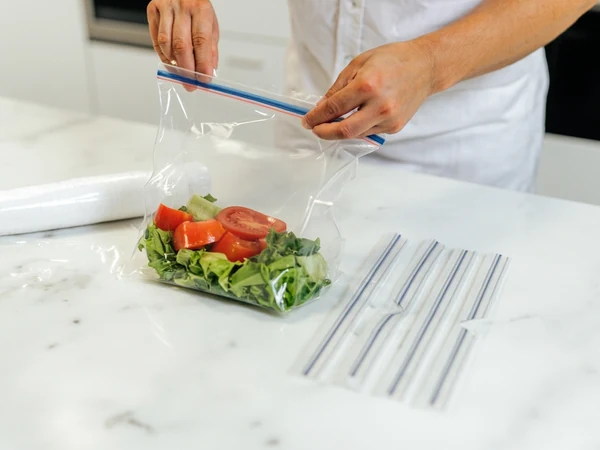
Ziplock Bag Air-Displacement Sealing: Manual Air Removal to Slow Oxidation and Condensation
Trapped air is a silent enemy of freshness in a ziplock bag: oxygen drives oxidation while moisture condenses and leaves food sitting in water. Manual air removal needs no equipment - lay the food flat, press evenly from the bottom up, and re-check the seal. Baodafor verifies seal strength, double-seal consistency and low-temperature bag durability so hand-compressed bags still hold up in cold-chain handling.
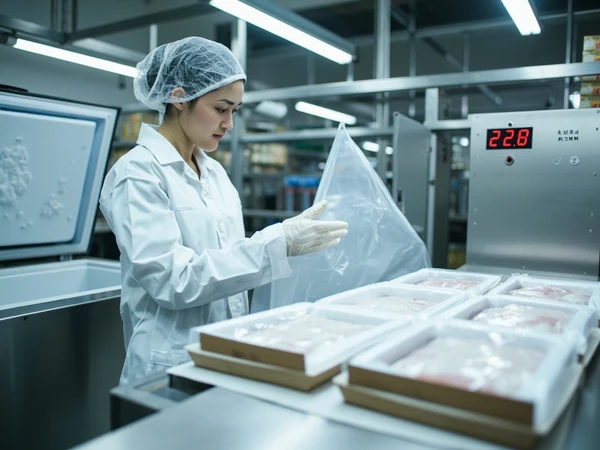
Low-Temperature Performance of PE Cling Film: Brittleness, Adhesion and Selection for Frozen Storage
Freezing is the most demanding environment for PE cling film: below -18°C polymer chain movement slows, toughness drops, corners split and condensation weakens adhesion. Low-temperature stretch, low-temperature impact toughness and haze/light transmission are the three indicators that decide whether a film works for frozen storage, supported by practical tips on temperature ratings, avoiding over-stretching and letting film return to room temperature before removal.
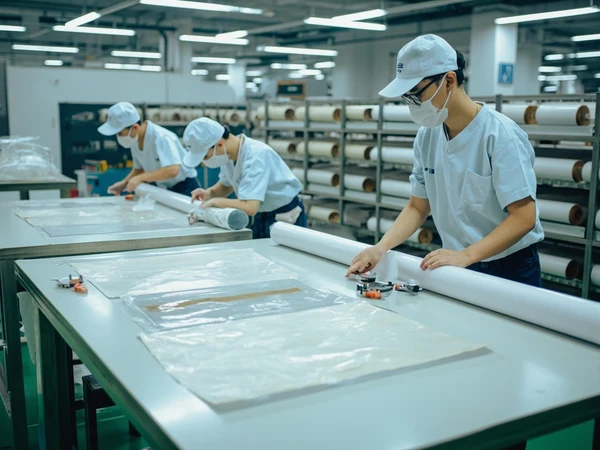
How to Choose Food Packaging Barrier Performance: Light Transmission, WVTR and Seal Strength Explained
Light transmission and haze, water vapour transmission rate, seal strength and sealing window are the core indicators behind freshness in food packaging. This article explains how they drive condensation in cold cabinets, moisture loss in chilled meat and moisture uptake in baked goods, and sets out a selection logic matched to product weight, storage temperature and shelf life.
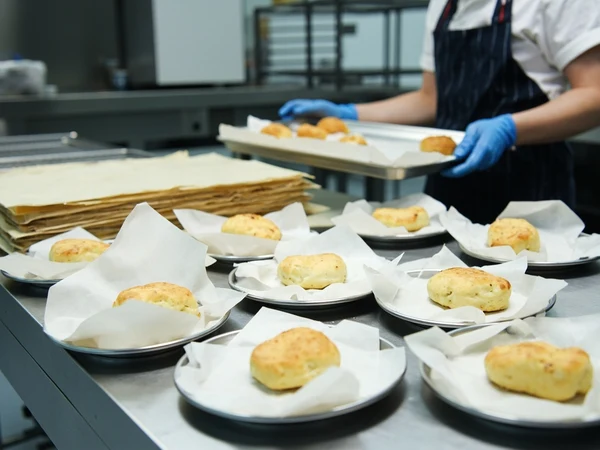
Grease-Proof Baking Paper Explained: Grammage, Coating, and Selection for Baking Scenarios
A breakdown of baking paper grease resistance across grammage, coating method, and temperature range, with selection guidance for laminated pastry, cookies, and cakes.
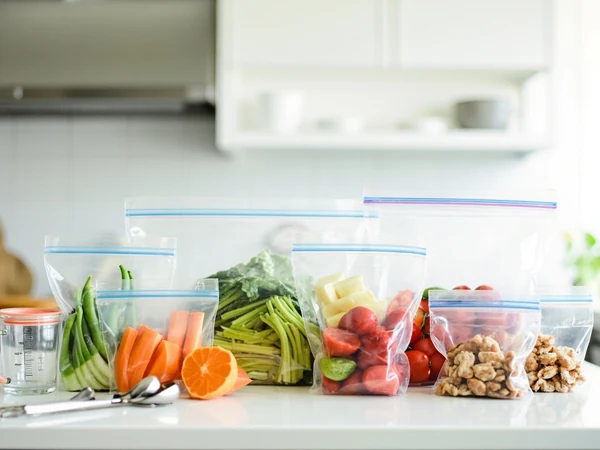
How to Choose the Right Ziplock Bag Size: A Practical Guide to Capacity, Thickness, and Opening Width
A practical guide to matching ziplock bag capacity, opening width, and thickness with different foods and storage conditions.
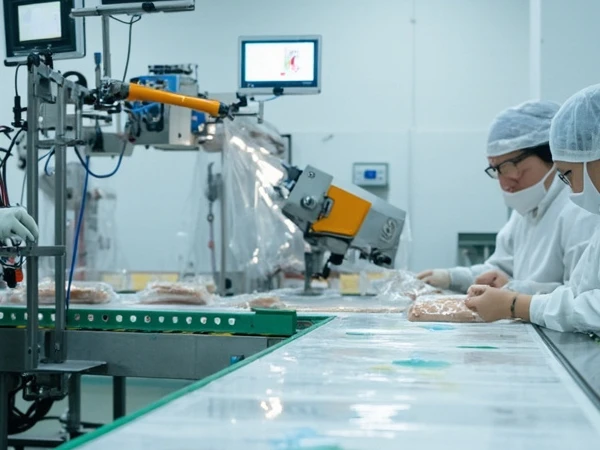
Six Essential Tips for Using Cling Wrap Correctly in Daily Life
Master the correct techniques for using cling wrap to maximize food freshness and extend preservation time in daily life.

Baodafor Launches Next-Gen Food Grade PE Cling Wrap with 30% Improved Stretch Performance
Baodafor R&D team develops next-gen food grade PE cling wrap with 30% stretch performance improvement through optimized formula and biaxial stretching process, maintaining food safety standards.




